Inside AECO’s New Project to Reduce Underwater Noise
As concern grows over the impact of vessel noise on Arctic marine life, AECO is launching a new two-year effort to turn research into practical guidance for expedition cruise operators. We spoke with project lead, Mark van der Hulst, about what lies ahead for the two-year period.
In March, AECO was awarded a US$499,000 grant from the Gordon and Betty Moore Foundation to advance efforts to strengthen measures aimed at reducing underwater radiated noise (URN) across the Arctic expedition cruise industry.
The initiative builds on a decision unanimously endorsed by the membership at the 2025 Annual General Meeting. The project officially kicked off in May, and a central question is what the project is set to achieve. Mark explains:
“AECO has always been recognized as an organization that combines knowledge, experience, and operational awareness into practices. This project advances the members’ mandate to support industry efforts to reduce URN and promote best practices in wastewater management for Arctic expeditions cruise ships. AECO’s members want to be active in this area and work with scientists, stakeholders and policymakers in Arctic and IMO-focused process on these matters.”
As a member organization, AECO’s Secretariat covers a broad range of work, particularly during the members’ operational season. The grant from the Moore Foundation now enables AECO to move from awareness and dialogue to a more structured and coordinated approach.
“This means consolidating science, engaging with members, researchers, and stakeholders, and comparing outcomes from existing studies and projects—informed by experience in Canada and Svalbard—to develop practical guidance that operators can actually use.”
Why is underwater radiated noise increasingly important in Arctic operations today?
It became a recognized environmental issue quite some time ago. The impact of underwater noise—and the growing awareness that vessel noise affects marine life—has increased over time. The International Maritime Organization (IMO) introduced guidelines, and the issue is on the IMO agenda, including at the Marine Environmental Protection Committee (MEPC). Arctic ecosystems and Indigenous communities depend strongly on healthy marine mammal populations, leading to growing international focus on quieter ship design, operational mitigation measures, and Arctic-specific underwater noise management strategies.
Building on AECO’s work on underwater noise
AECO has been involved in projects related to underwater noise in both Canada and Svalbard. The Svalbard-project in still ongoing and a new round of fieldwork is being planned this season.
The Canada project recently wrapped up with 11 AECO members in total participating in the research that focused on collecting ship-specific noise measurements under different operating conditions and developing predictive noise maps that show how vessel activity contributes to the underwater soundscape.
“First results demonstrate that operational decisions—such as routing, timing, speed, and vessel characteristics—play an important role in shaping noise levels across space and time, and in how these noise patterns overlap with important marine habitat. This outcome provides a strong scientific input for future mitigation measures or operational guidelines,” Mark explains.
AECO works closely with researchers, and Arctic partners—what does that collaboration look like in practice, including the role of local perspectives?
Conclusions or measures should always be based on facts. A known quote is: “A fact is an objective, verifiable truth that can be proven with evidence, while an opinion is a subjective belief, feeling, or interpretation that cannot be definitively proven true or false.” Therefore, the work we do with researchers is important to gain facts. These facts should provide the basis to work with members and other Arctic stakeholders. The knowledge of Indigenous communities plays an important role in the cooperation as well, as a critical, credible, and often indispensable source of ecological information.
“I hope this project will be remembered as the result of a proactive organization.”
Making guidance usable across vessel types
The funding from the Moore organization allows AECO to create a structured project framework for translating research into action. It will be used to map existing activities, create a multi-stakeholder workshop where URN-researchers, Indigenous representatives, NGOs and members share findings, identify gaps and work towards practical measures such as guidelines or for example wheelhouse posters.
“AECO has the ambition to become an industry voice and a contributing partner in URN-related policy matters. Research findings are shared with members and partners to support informed decision-making and continuous improvement across the expedition cruise fleet,” Mark says.
He adds that AECO’s member vessels vary in size and type, from small sailing vessels to larger motor vessels. The tools being developed aim to provide operational support for all members while recognising differences in what operators can implement. The goal is to create practical solutions that are workable across the membership and also relevant for operators outside of it.
A proactive community driving industry change
AECO’s members have consistently been proactive, actively participating in the development of the Polar Code and working with various national maritime authorities on legislative matters. They banned the use of HFO years before it became a requirement, and during COVID, guidelines developed by an AECO workgroup were used outside the maritime industry.
How do you hope this project will support the industry, authorities and local communities over time?
I sincerely hope that many years from now this project will be remembered as the result of a proactive organization, where the outcomes have formed a basis or provided input for a global source of URN knowledge, and as an accepted source of operational guidelines.
If we can achieve that in the field of URN, that would be fantastic.
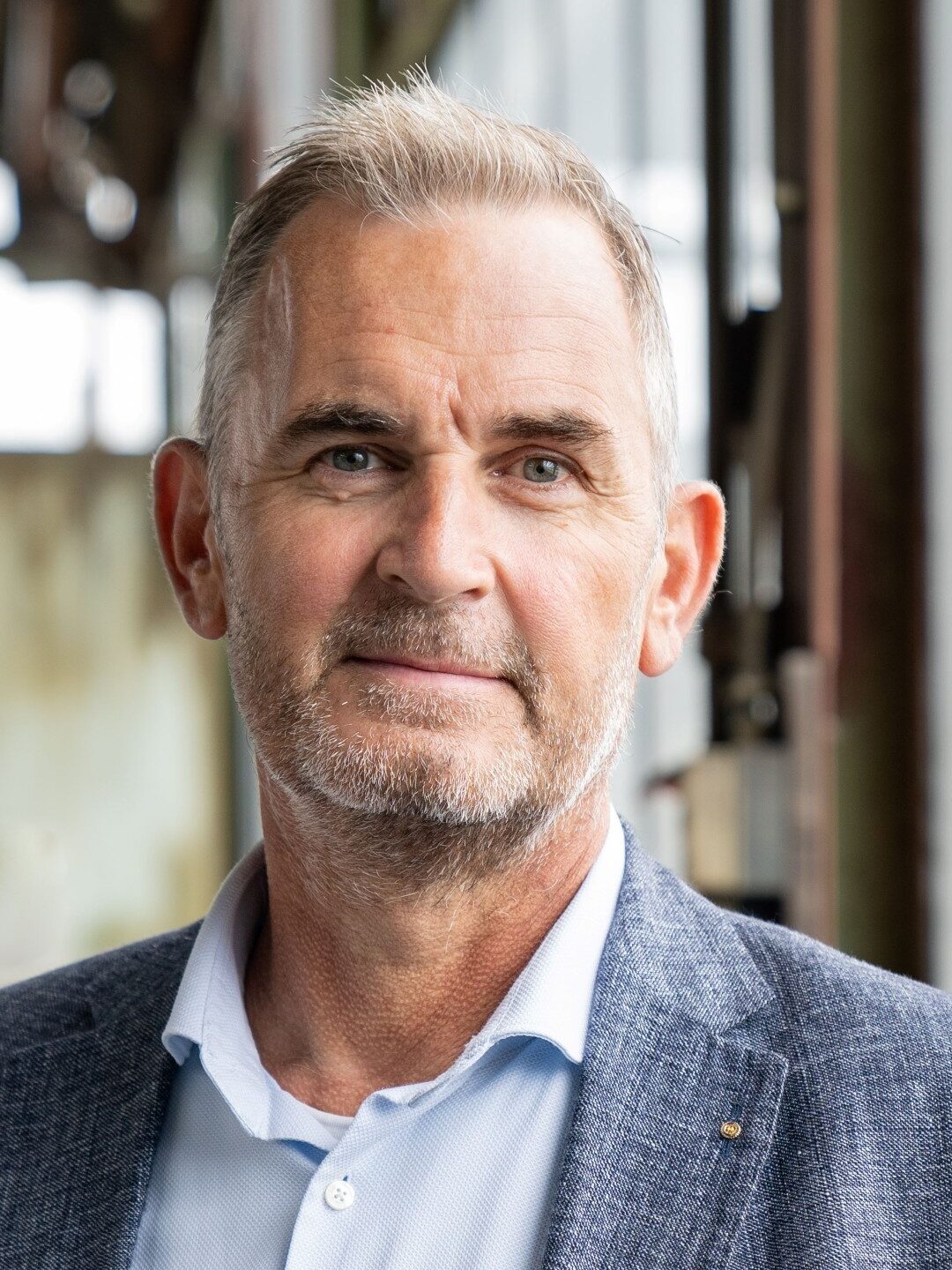
Mark van der Hulst
Mark van der Hulst has worked in the maritime industry since joining the Royal Netherlands Navy in 1990. He later spent 15 years with one of the Arctic expedition operators that founded AECO. He has served as both a member and chair of the marine committees in IAATO and AECO, been a member of both executive committees, and has therefore been actively involved in the development of the Polar Code at the International Maritime Organization.
“When I was asked if I would be willing to lead this project, it took me one second to say yes. Working with the AECO Secretariat and members in an industry close to my heart is very special to me. What draws me to this work is the combination of a practical approach, policy work, and collaboration with stakeholders to achieve the same goal: making a difference and working proactively on an important matter.”
Gordon and Betty Moore Foundation
Gordon and Betty Moore established the foundation to create positive outcomes for future generations. In pursuit of that vision, the foundation advance scientific discovery and environmental conservations.
Last update: 07. September 2026