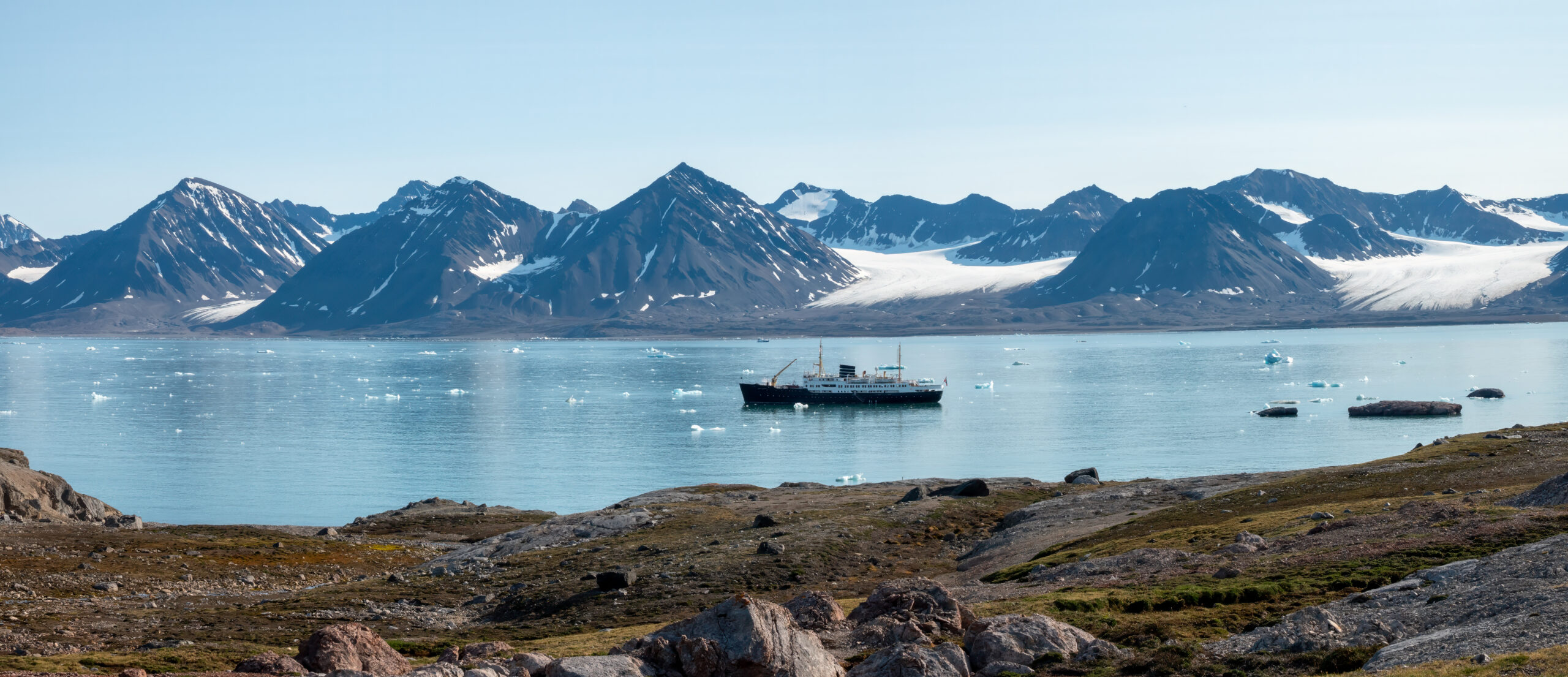
New Study: Expedition Cruise Ships Among Quietest in Arctic Waters
Most expedition cruise vessels operating in the Canadian Arctic produce lower underwater noise levels than cargo ships, tankers, and bulk carriers measured in the same areas, according to results from a collaborative research program measuring ship noise in Arctic waters. The findings draw on more than 66 vessel noise measurements from 11 operators, covering 20 expedition cruise vessels.
Key findings
The results come from the Underwater Noise Measurement, Management and Mitigation in the Canadian Arctic (UNM³ CA) program, which combines field measurements with operational data to better understand how vessel activity influences underwater radiated noise.
The program also shows that many member vessels belonging to AECO, the Association of Arctic Expedition Cruise Operators, operate at or below recognized “quiet vessel” reference standards across much of the measured frequency range—a level that comparatively few commercial cargo vessels meet at similar speeds.
Additional findings highlight
• Underwater noise levels vary depending on speed, machinery configuration, and environmental conditions.
• Certain onboard systems, including sonar and ultrasonic antifouling, can contribute to higher-frequency noise relevant to marine mammals.
From measurement to operational insight
By providing vessel-specific feedback, the program gives operators a clearer understanding of how their activities influence underwater noise under real operating conditions and helps identify practical ways to reduce noise.
“These findings show that expedition cruise operators can play a role in reducing underwater noise in Arctic waters,” said Frigg Jørgensen, executive director of AECO. “Linking measurements with operations helps identify practical ways to reduce noise.”
The data has been collected with calibrated hydrophones placed along main Arctic shipping corridors in Nunavut and Nunatsiavut. Participating vessels conducted controlled transits while documenting operating conditions, allowing for consistent and comparable analysis across ship types.
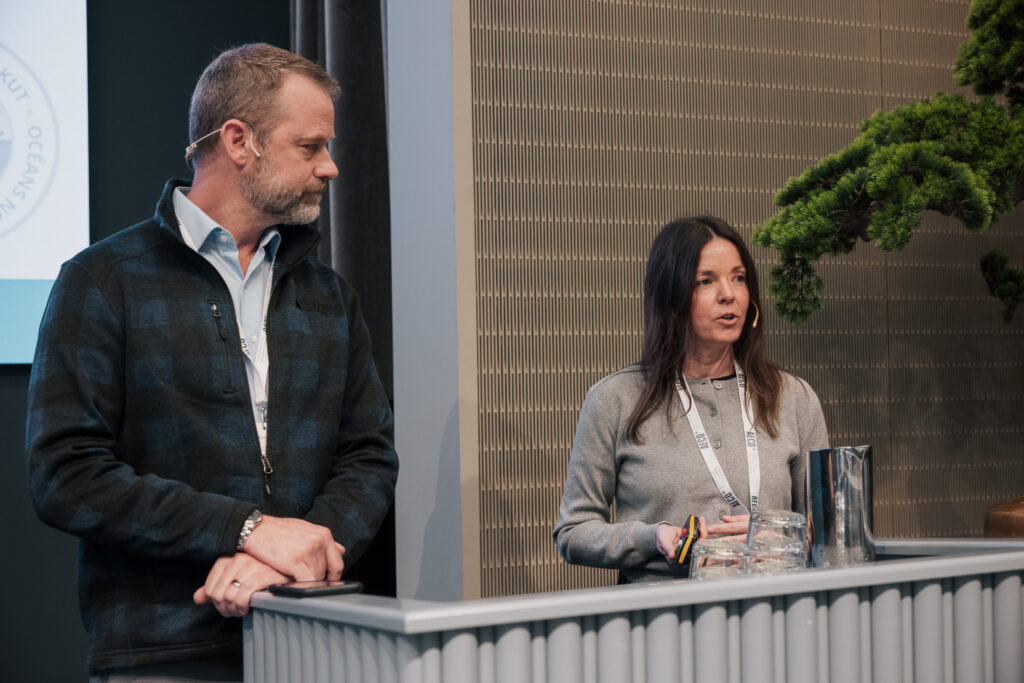
“These measurements show that operational choices—such as speed and equipment use—can have a measurable impact on underwater noise,” said researcher Joshua Jones, from UC San Diego’s Scripps Institution of Oceanography, who has led the program. “These insights highlight both the complexity of underwater noise and the importance of operational awareness.”
Collaboration across science, industry, and communities
The UNM³ CA program brings together AECO, Oceans North, UC San Diego’s Scripps Institution of Oceanography, Nunavut Hunters and Trappers Organizations, and the Nunatsiavut Government, combining scientific expertise with operational experience and regional knowledge.
“Understanding underwater noise is essential for protecting Arctic marine ecosystems and supporting the communities that depend on them,” said Kristin Westdal, vice president, science at Oceans North. “This type of collaboration helps ensure that the knowledge developed is both scientifically robust and relevant in practice.”
Supporting practical pathways forward
The results contribute to a growing evidence base for practical, science based approaches to managing underwater noise by linking measurements with operational data.
Building on this work, AECO recently received US$500,000 from the Gordon and Betty Moore Foundation to strengthen its capacity to translate research into practical tools and guidance. The two year project aims to support the development of approaches that are grounded in science and workable across different vessel types and operating conditions. The project is described in detail in AECO’s latest article, Inside AECO’s new project to reduce underwater noise.
Scripps Institution of Oceanography
UC San Diego’s Scripps Institution of Oceanography is a center for ocean and earth science research, at the University of California, San Diego.
Oceans North
Oceans North develops programs and policies to address threats to northern marine ecosystems, working in partnership with coastal and Indigenous communities and informed by local knowledge and regional challenges.
Betty and Gordon Moore Foundation
Gordon and Betty Moore established the foundation to create positive outcomes for future generations. In pursuit of that vision, the foundation advance scientific discovery and environmental conservations.
Contact
For media inquiries and interview requests, please contact:
aeco@aeco.no
Last update: 11. June 2026