Listening Beneath the Surface: Advancing Arctic Underwater Noise Research
What happens under the surface when an expedition cruise vessel is at anchor, conducting a landing, or operating zodiacs in an Arctic fjord?
This question lies at the heart of Sound-Cruising, a joint research project by AECO, the Norwegian Polar Institute (NPI), and Aarhus University in collaboration with Arctic expedition cruise operators.
Building on knowledge generated through a recently concluded successful underwater noise project in the Canadian Arctic, and a pilot study conducted in Svalbard in 2023, Sound-Cruising represents the next step in understanding how expedition cruise operations contribute to underwater radiated noise in polar waters.
Unlike many underwater noise studies that focus on vessels in transit, Sound-Cruising examines activities unique to expedition cruising. Researchers are investigating the acoustic characteristics of guest landings, zodiac operations, dynamic positioning, and other non-transit activities that take place in sensitive Arctic fjords.
Research in real operating conditions
A defining feature of the project is its focus on real-world expedition operations. Rather than conducting controlled experiments, researchers collected data during real expedition operations.
For the researchers, collaboration with an expedition cruise operator has been essential.
“Being able to conduct the fieldwork with HX Expeditions as an industry partner has been key in the data collection process while likewise providing first-hand experience of operational activities, safety considerations, and valuable insights from expedition teams and bridge officers,” says Fabienne Mannherz, an Aarhus University PhD student working on the project.
Building one of the first datasets of its kind
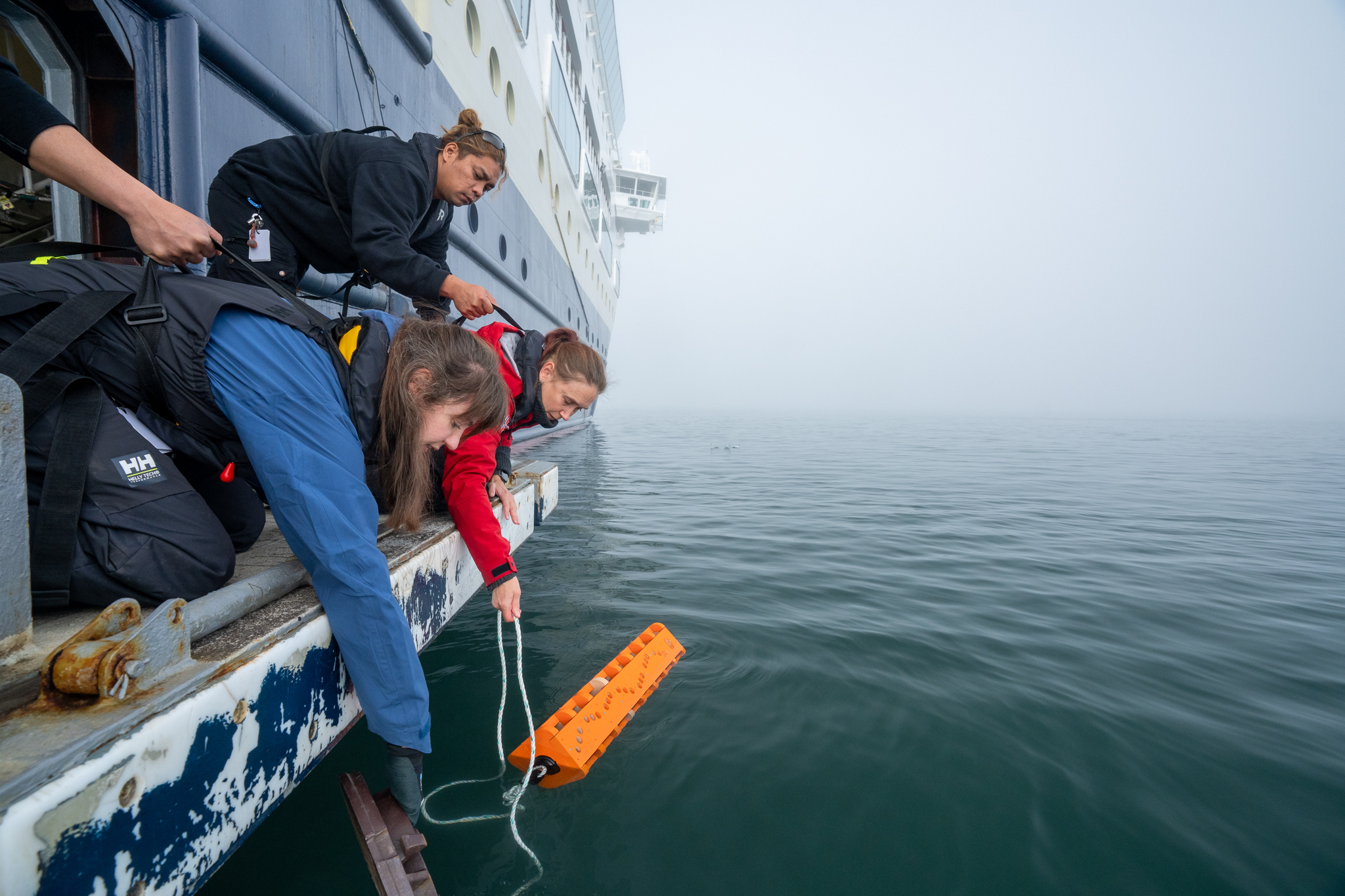
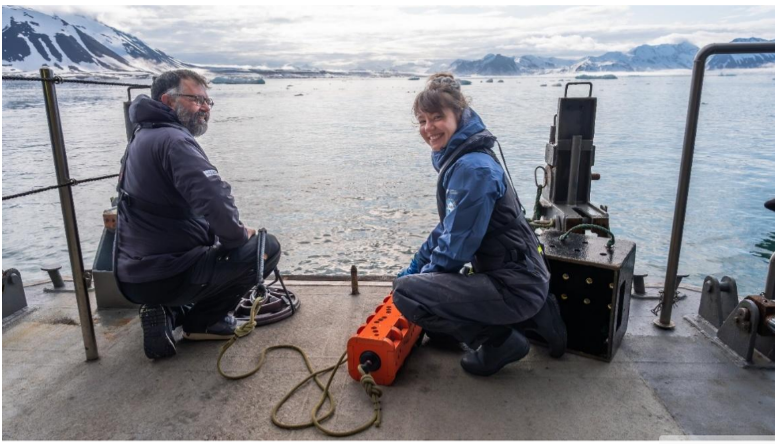
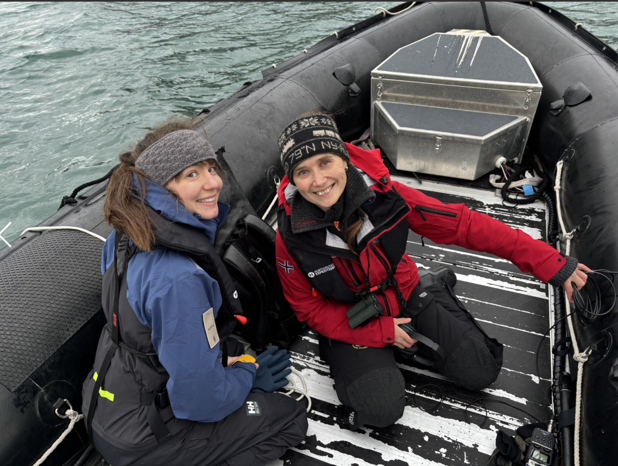
To achieve the project’s objectives, Fabienne Mannherz and her colleague, senior research scientist Heidi Ahonen, from NPI, deployed autonomous acoustic recorders at two key locations in Svalbard: near Smeerenburg in the north and Hornsund/Gnålodden in the south.
Using underwater acoustic recorders and vessel-tracking data (AIS), they are building a dataset specifically designed to understand how expedition cruise activities contribute to local marine soundscapes.
During the 2025 and 2026 field seasons, the project collected a total of 107 days of underwater acoustic recordings at Smeerenburg and 88 days at Hornsund/Gnålodden. This growing dataset is being incorporated into ongoing analyses, providing new opportunities to compare underwater soundscapes and wildlife activity across seasons.
At the same time, the research team gathered handheld acoustic recordings during expedition operations, creating a unique dataset that captures how underwater noise varies between locations, environmental conditions, and operational activities.
The growing dataset now includes 33 acoustic recordings of the same expedition vessel operating under different environmental and operational conditions, collected using a handheld hydrophone, allowing the researchers to compare how vessel activity, weather, and local surroundings influence underwater sound levels.
Preliminary analysis has also identified approximately 80 dynamic-positioning operations with AIS matches across the two study areas, to help connect the vessel activities with measured sound levels and build a more detailed picture of the noise.
Science meets expedition cruise operations
The project has also provided opportunities to engage guests directly with Arctic science.
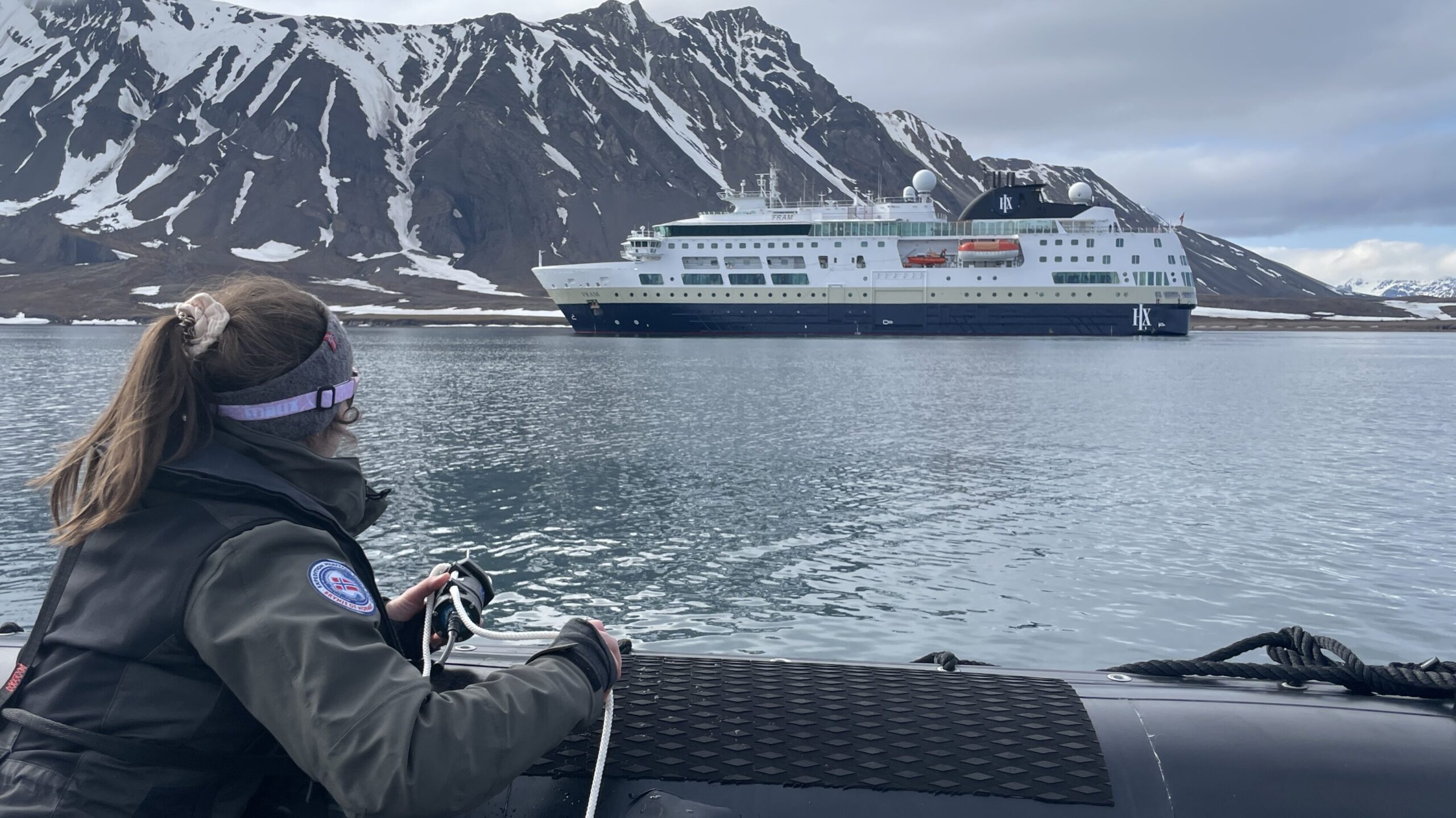
“We greatly enjoyed being able to share our research with guests on board while the work was taking place right in front of their eyes,” says Fabienne Mannherz.
By carrying out research alongside expedition operations, the project allowed guests to witness firsthand how scientific data is collected in the Arctic and how research contributes to a deeper understanding of the environment.
HX provided field and logistical support on board MS Fram. For the company, participation reflects a broader commitment to responsible operations and science-based decision-making in the Arctic.
“The Sound-Cruising Project lets us see Svalbard’s fjords through a different lens: one of listening as much as looking. The insights will strengthen our ability to cruise with care and to protect the wildlife whose waters we are visitors to,” says Karin Strand, Vice President for Expedition Development, HX Expeditions.
According to Karin Strand, understanding underwater noise is an important part of responsible exploration because many Arctic marine mammals depend on sound to communicate, navigate, hunt, and detect potential threats. By supporting scientists studying underwater soundscapes, the aim is to strengthen knowledge that can help inform more sustainable expedition operations in the Arctic.
Early insights and what’s next
While analysis is still underway, Sound-Cruising has already delivered valuable insights into expedition cruise activities in Svalbard. By recording the same vessels repeatedly under different environmental conditions and identifying numerous operations suitable for detailed study, the project is building a unique foundation for understanding how underwater noise varies in real operational settings.
Early analyses indicate that underwater sound levels can vary considerably depending on operational mode and environmental conditions. This suggests that operational practices, environmental factors, and technological solutions may all play an important role in influencing noise levels.
Preliminary observations also highlight the importance of considering the wider Arctic soundscape. Expedition vessels share Arctic waters with research vessels, government ships, local community traffic, and other maritime activities, all of which contribute to the sounds beneath the surface.
First results from the project are expected to be presented during Arctic Expedition Cruise Week in Oslo, October 20–23. Fabienne Mannherz and Heidi Ahonen will present the project at the Arctic Cruise Conference and participate in the AECO Marketplace.
Together with AECO’s broader underwater noise initiatives, including the recently launched project funded by the Gordon and Betty Moore Foundation, Sound-Cruising is contributing to the knowledge needed for science-based stewardship of Arctic waters.
About Sound-Cruising
Sound-Cruising: Investigating Characteristics and Noise Budgets of Cruise Operations in Svalbard is a research project carried out by the Norwegian Polar Institute, Aarhus University and AECO in collaboration with Arctic expedition cruise operators.
The project spans two operational seasons (2025-2026) and is funded by the Svalbard Environmental Protection Fund.
Arctic Expedition Cruise Week 2026
The first results of the Sound-Cruising project will be presented by Fabienne Mannherz and Heidi Ahonen to AECO members and other industry stakeholders during Arctic Expedition Cruise Week this October.
Read More

Last update: 08. September 2026