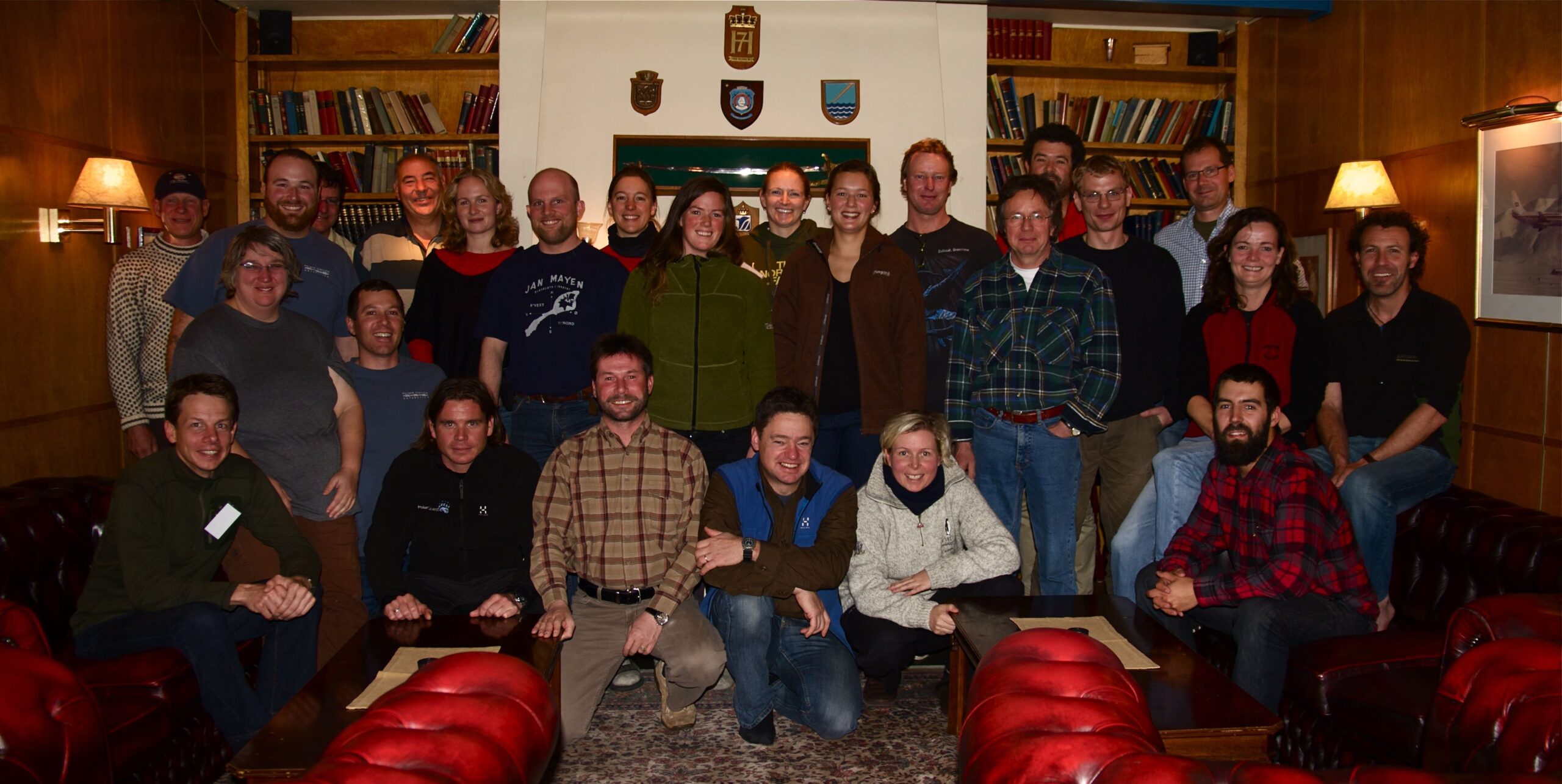
Site inspection on Svalbard during the development of AECO’s site-specific guidelines. Photo: AECO archive.
Twenty Years of Change
How Frigg Jørgensen helped shape
the standards behind Arctic expedition cruising
When Frigg Jørgensen arrived in Longyearbyen as a 19-year-old, she could not have predicted that she would spend the next four decades witnessing Arctic expedition cruise tourism evolve from a niche industry into a globally established sector with high expectations for stewardship and responsibility.
Nor that she would help shape how one of the world’s most remarkable travel destinations balances tourism, environmental protection, and community interests.
Today, as Executive Director of AECO, she reflects on the changes that have transformed both the industry and the Arctic itself.
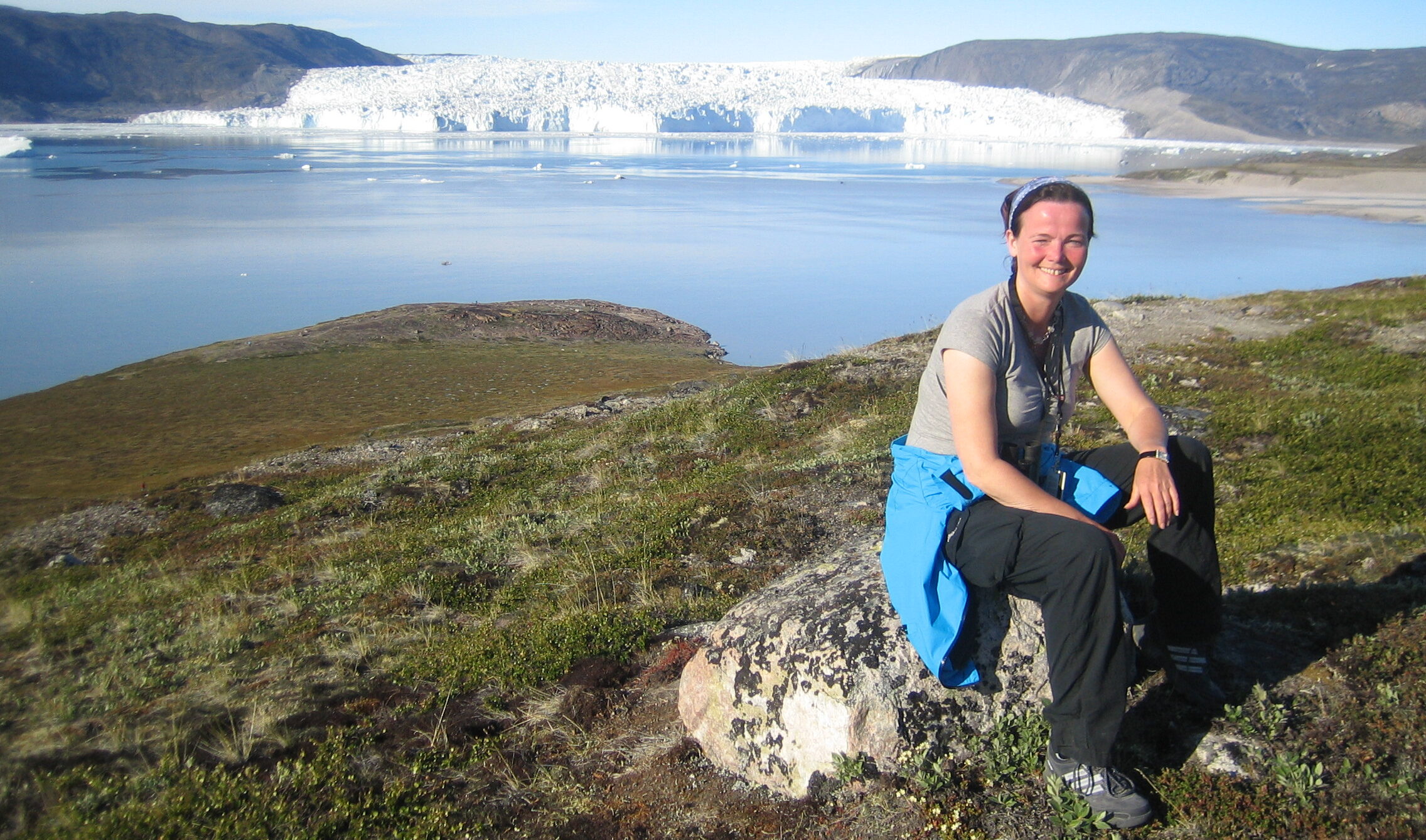
This year marks 20 years since Jørgensen joined the Association of Arctic Expedition Cruise Operators (AECO).
Looking back, she sees an Arctic that has changed significantly, but also a sector that has matured in ways that were difficult to imagine when she first joined AECO.
“Not all development, not all growth is for the better,” she says. “It has to be managed.”
That belief has been a guiding principle throughout AECO’s development.
Building a common voice
Jørgensen’s path to AECO was shaped by a long career in Svalbard. After arriving in Longyearbyen in the mid-1980s, she became involved in tourism development and later helped build the local tourist office. She subsequently moved into a newly established advisory role with the Governor of Svalbard before accepting the position of general secretary and becoming AECO’s first employee in 2006.
The decision was driven by a desire to remain in Svalbard and continue working with tourism. What began as a practical decision became a long-term commitment to helping shape how tourism develops in the Arctic.
At the time, however, the association she joined was very different from AECO of today.
“There were really two problems we were trying to solve,” she recalls. “The industry lacked a common voice toward authorities, but we also needed to put our own house in order.”
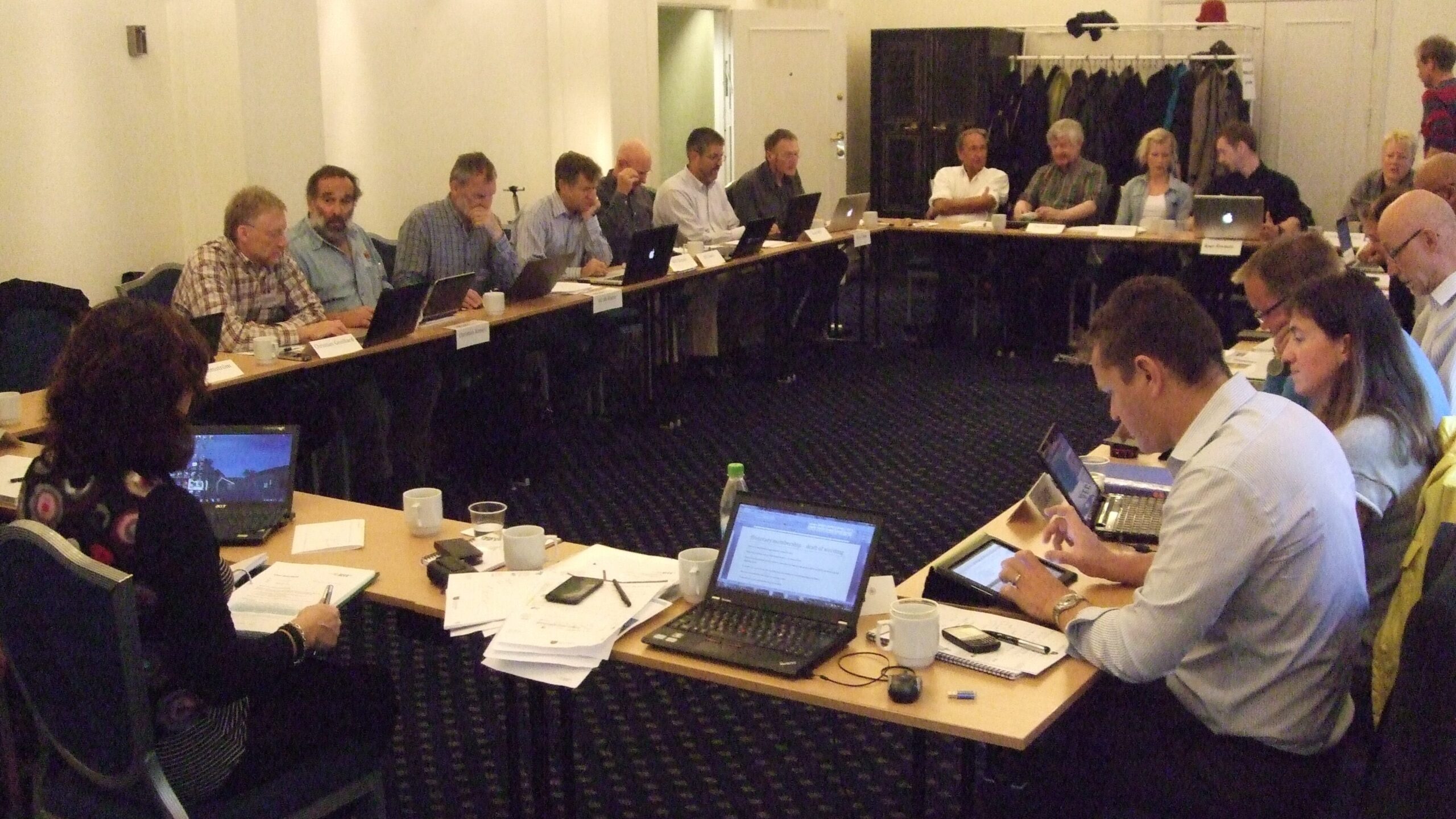
Early expedition cruising operated in a regulatory environment that was still developing. Industry standards varied widely, and some practices that were once considered acceptable would be impossible today.
Jørgensen describes parts of the early tourism landscape as a “wild west” period. Ships approached glacier fronts at distances that would be unthinkable today, wildlife interactions could be intrusive, and more than one cultural remain ended up in private collections.
Operators often worked independently, with limited coordination and few shared expectations.
AECO was established to change that.
Its purpose was not only to represent the industry’s interests but also to help define what responsible expedition cruise tourism should look like in practice.
From guidelines to accountability
Creating guidelines was only the first step.
In the years that followed, AECO’s work broadened considerably. What began with a focus on operational practices gradually developed into a wider effort to strengthen accountability, environmental stewardship, preparedness, and relationships with Arctic communities.
A turning point came when AECO introduced its observer program, which Jørgensen describes as one of the organization’s most important initiatives.
The shift was subtle but significant. Rather than simply encouraging members to follow agreed standards, AECO began systematically observing operations and assessing whether those standards were being applied in the field.
“It made us more serious, more committed, more responsible,” she says.
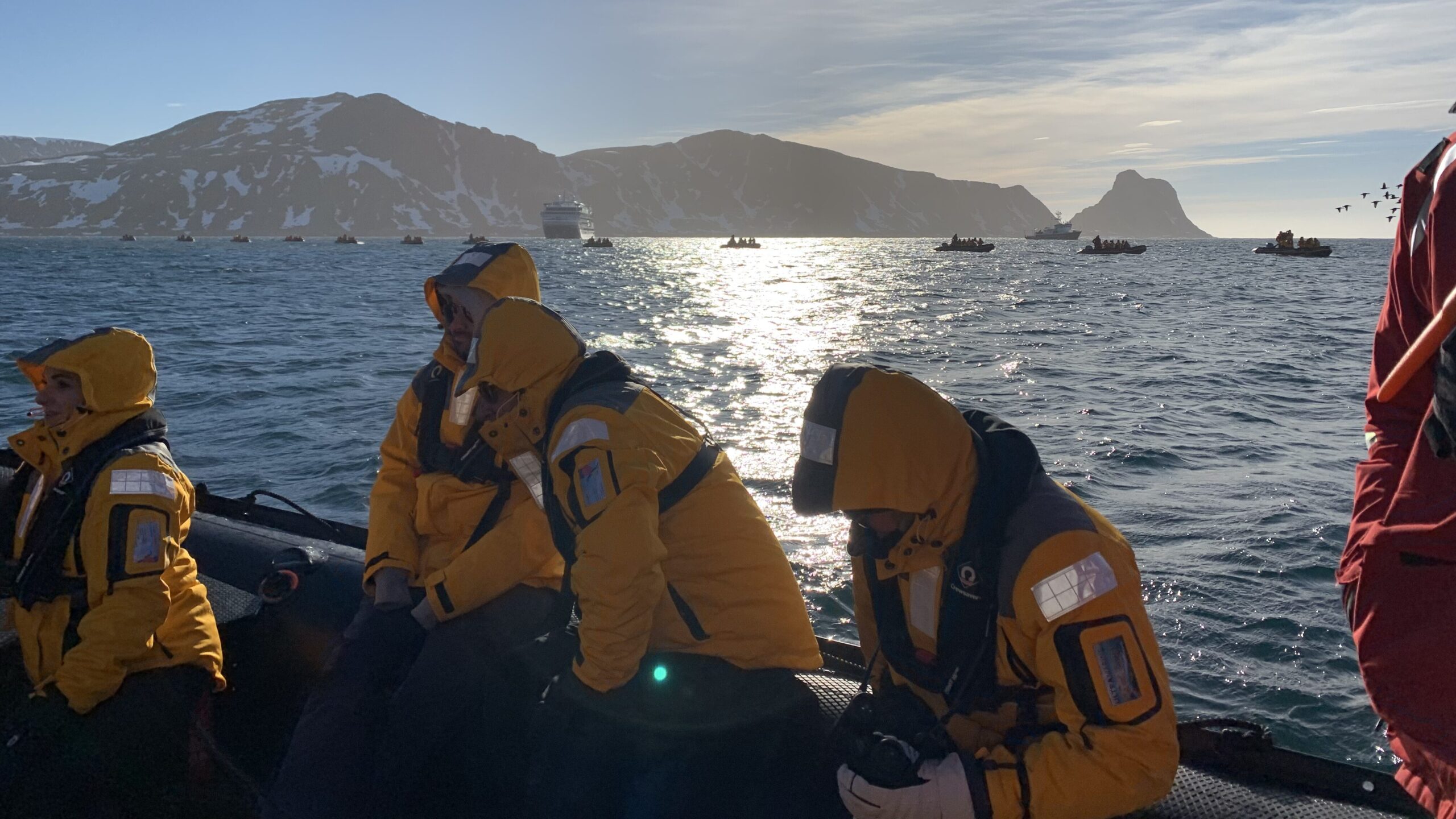
The observer program helped establish a culture of accountability that remains central to the organization today. Membership became more than a statement of intent. It became a commitment to shared operational standards and continuous improvement.
Looking back, Jørgensen believes this move fundamentally strengthened AECO’s credibility, both within the industry and among external stakeholders.
Beyond Svalbard
When Jørgensen joined AECO in 2006, the organization’s focus was largely on Svalbard. Much of the work centered on developing practical guidelines and building trust between operators and authorities.
What followed was a much broader development than she expected.
“The scale of what we do today would have been difficult to imagine when I started,” she says.
One of the changes that has most struck Jørgensen is the extent to which AECO’s role has expanded. What began as a small association with eight operators in Svalbard now brings together a much wider range of stakeholders across the Arctic. Operators, authorities, scientists, community representatives, and environmental organizations regularly work with the association to address shared challenges.
One example Jørgensen points to is the Joint Arctic Search and Rescue (SAR) initiatives, which bring industry and authorities together to strengthen preparedness in a region where emergency response is often complex and demanding.
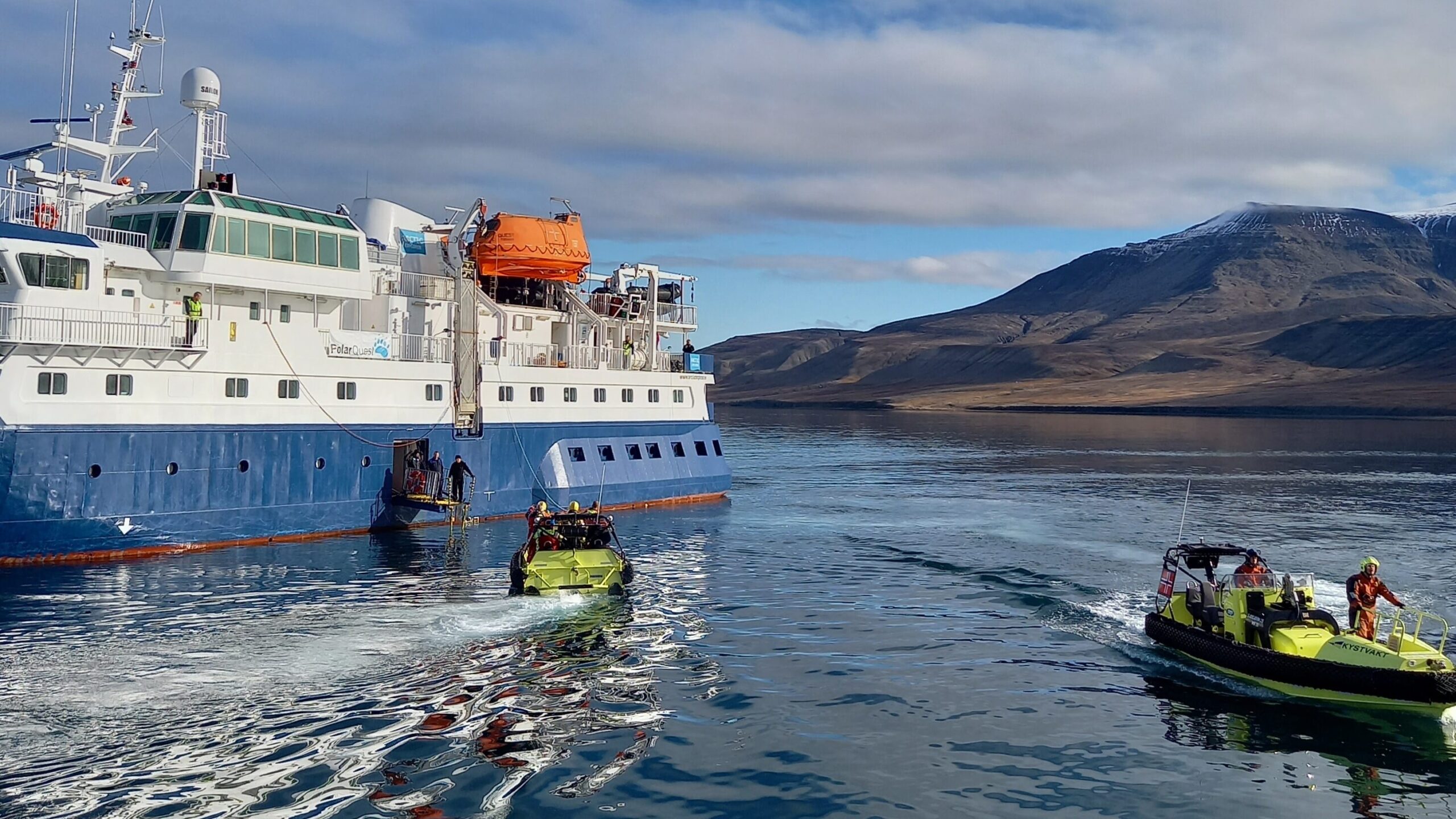
Over time, AECO has also broadened its focus beyond operational standards, most notably by establishing community engagement as a core pillar and making local value creation an objective alongside environmental stewardship and responsible tourism.
Among the milestones that stand out in her memory is AECO’s decision to prohibit the use of heavy fuel oil among its members years before a broader regulatory ban came into force.
The decision reflected a philosophy that has shaped much of the organization’s work over the past two decades: responsible Arctic operations should not always wait for regulation to lead the way.
As a result, AECO has changed from an organization primarily concerned with industry best practices into an influential stakeholder in Arctic affairs, which reflects broader changes in Arctic tourism itself. Expedition cruising has become more international, more visible, and more complex, while expectations from governments, communities, and travelers have grown alongside it.
Looking back, Jørgensen sees the changing agenda itself as evidence of how the industry has changed. Sustainability now occupies a much larger place in the organization’s work.
What would have been hardest to imagine twenty years ago?
“Probably the scale and professionalism,” she says.
Competitors at the same table
One of the themes that runs throughout Jørgensen’s reflections is collaboration.
Expedition cruise operators compete vigorously for customers. Yet within AECO they also work together to establish and maintain common standards.
After two decades with the organization, Jørgensen says this remains one of the developments she finds most remarkable.
“It is quite remarkable that competitors are collaborating around what we are managing as responsible tourism.”
Building consensus has not always been easy. Different companies have different priorities, operational models, and business objectives. Nevertheless, members have repeatedly agreed that certain issues transcend commercial competition.
That collective commitment has helped establish a framework for responsible operations in some of the world’s most sensitive environments.
It has also strengthened AECO’s legitimacy.
For Jørgensen, another notable change has been watching that recognition extend beyond the tourism sector itself.
In recent years, AECO has partnered with researchers and conservation organizations on emerging challenges such as underwater noise. Support from internationally recognized funders, including the Betty and Gordon Moore Foundation, has helped advance this work and reflects the organization’s growing credibility as a partner in Arctic stewardship.
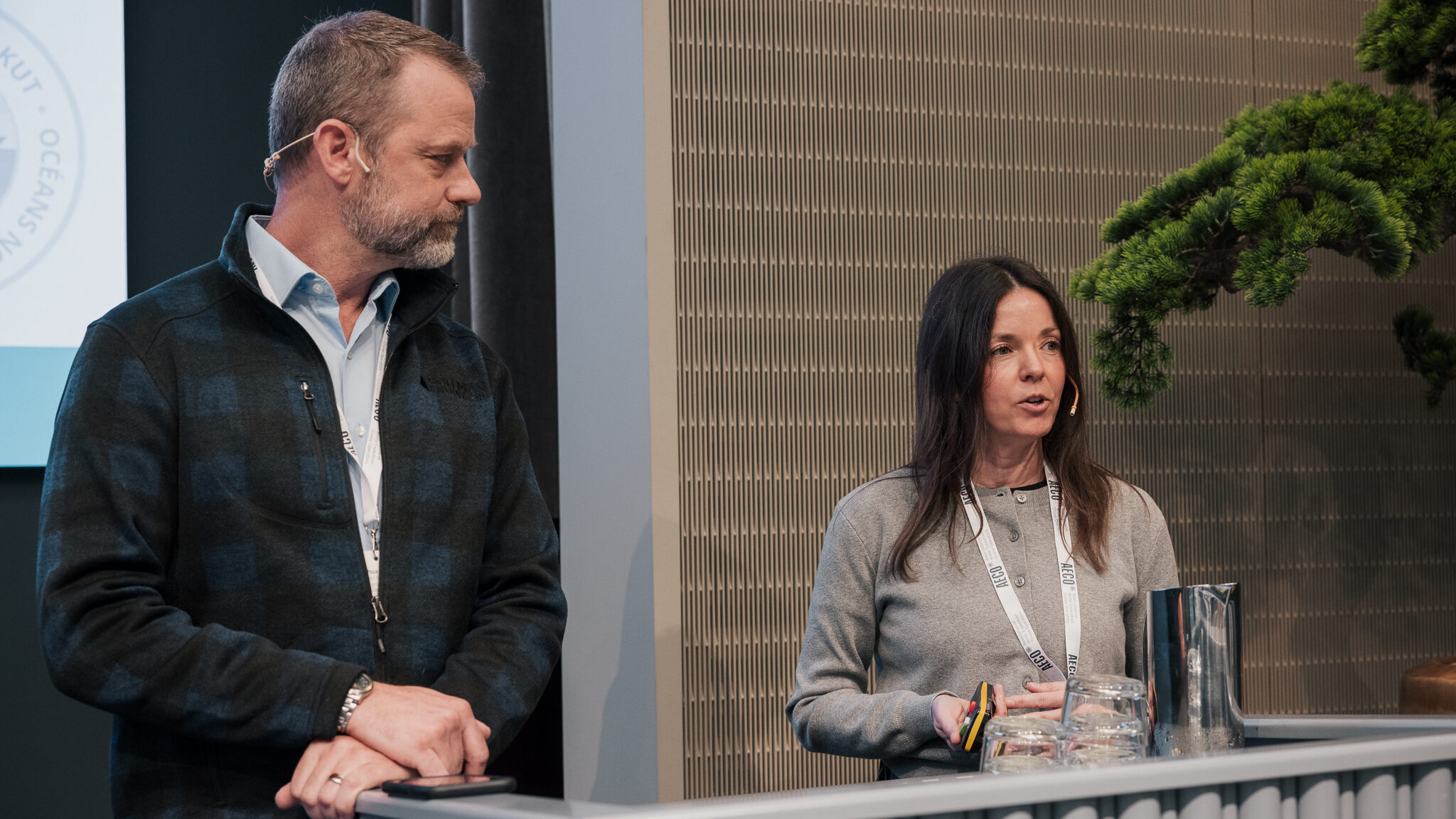
The members’ decision to focus on this issue reflects AECO’s longstanding ability to identify and address emerging challenges, often before they come to wider public attention.
As Jørgensen sees it, credibility comes not simply from representing operators, but from maintaining standards that carry real meaning.
“Membership has value because it comes with expectations,” she says. “People can see the difference between being inside and outside that community.”
Learning from crisis
The industry’s progress has not been linear. One incident involving a polar bear became a defining moment, generating extensive media coverage, public petitions, reputational damage, and significant consequences for the operator involved.
Jørgensen points to moments like these as important reminders of how quickly public trust can be lost.
The Arctic is a highly visible environment, and AECO members are increasingly subject to scrutiny from governments, environmental organizations, communities, and the wider public.
The lesson was clear: responsible tourism cannot rely on good intentions alone. It requires robust standards, transparency, and continuous accountability.
Looking ahead
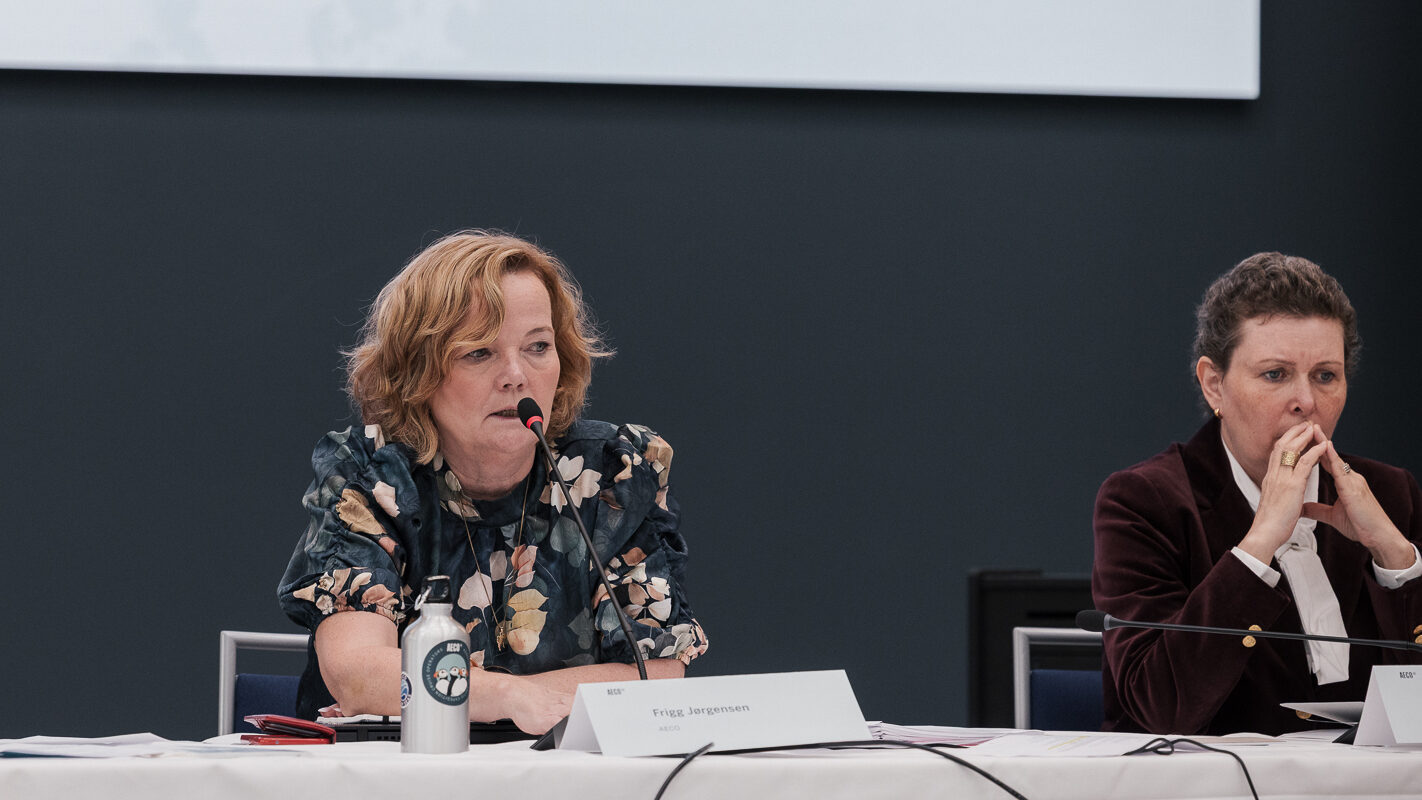
After two decades in the organization, Jørgensen believes the industry’s greatest challenge remains managing operations and growth responsibly.
The question is no longer whether Arctic tourism will develop, but how.
Climate change, changing visitor expectations, new destinations, and evolving operational models will continue to reshape the industry. The need for cooperation, she argues, is unlikely to diminish.
Asked what the Arctic might look like without AECO, Jørgensen reflects on how different the industry’s development could have been.
Development would likely have been more fragmented. Operators might have created standards individually rather than collectively. Authorities would have lacked a single industry counterpart, and opportunities for cooperation would have been fewer.
AECO, she says, has not solved every challenge. But it has helped create a shared framework for responsible development in a region where the consequences of poor decisions can be significant.
After twenty years, what makes Jørgensen proudest is not a single campaign, regulation, or policy victory, but the collaborative culture the association has built.
The pandemic provided perhaps the clearest demonstration of that culture. As Arctic cruise operations came to a standstill, AECO faced the same uncertainty as the rest of the industry. Still, the crisis reinforced the value members placed on the association. Even when ships were no longer sailing, they remained committed to the association, maintaining a common voice and preserving the cooperation that had developed over years of working together
The fact that competitors continue to sit around the same table, debate difficult questions, and strive toward shared standards for responsible tourism remains, as she puts it, remarkable.
In an Arctic undergoing rapid change, that spirit of cooperation may prove to be one of the region’s most valuable tools for managing tourism responsibly in the decades ahead.
Last update: 07. September 2026