Gnålodden
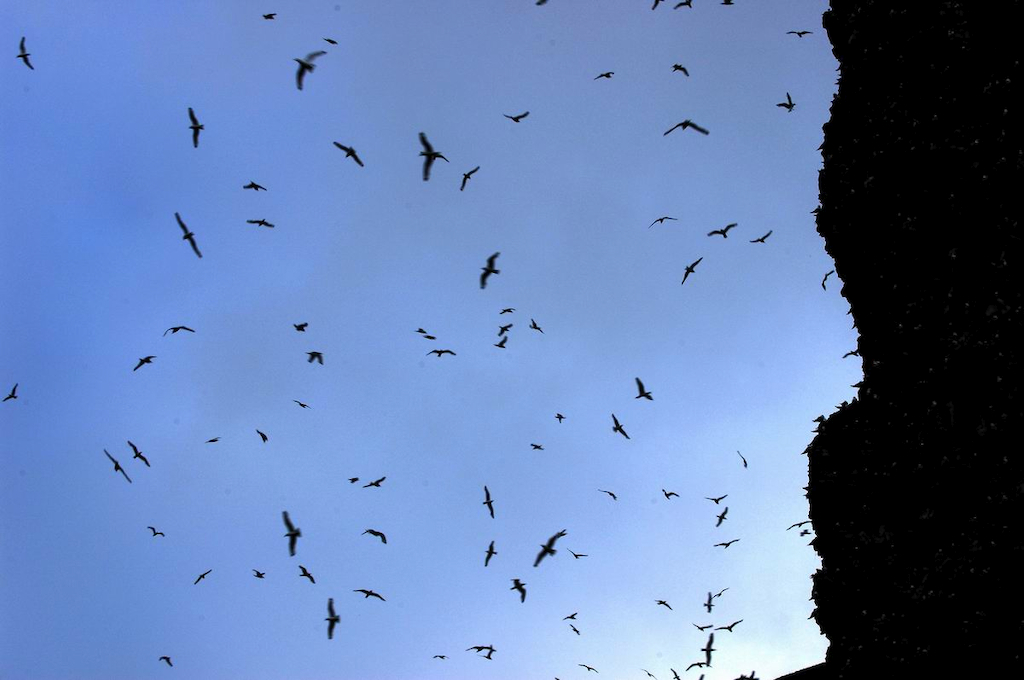
Gnålodden is the incessantly humming mountain, inhabited by a shrieking kittiwakes.
Last update: 30. June 2026
The female hunter and trapper Wanny Woldstad was tougher than most males. Below the steep and very noisy bird cliff she stayed in one of her hunting cabins. The cabin stands as a monument over toil and self-denial. Her nearest neighbors were the remains of a Russian trapping station and a grave of a 17th century whaler.
Download PDF
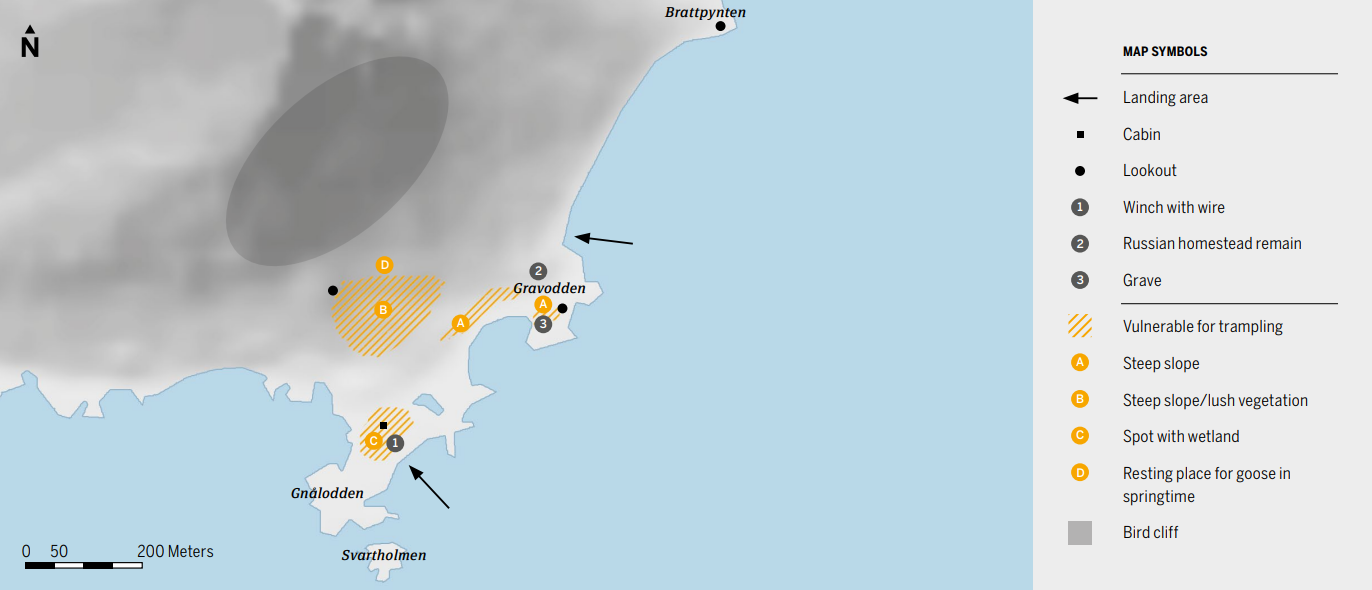
77°0.49’N 015°52.3’E
Vegetation
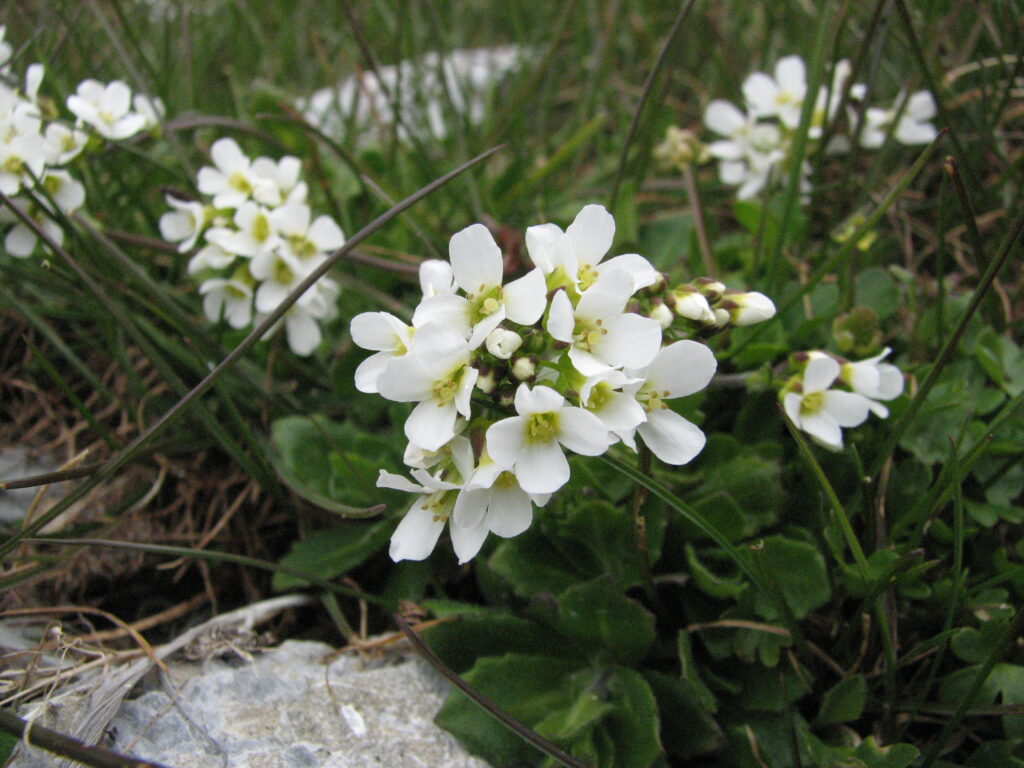
The south facing slope and rich nutrient supply from the large bird colony makes this a particulary productive vegetation site. Just inside the shoreline are continuous carpets of moss. Large diversity of flora can be found further up the cliff, including several species of buttercups, saxifrages, and a large population of the rare alpine rock cress.
Fauna
The most striking feature of Gnålodden is the bird cliff in the characteristic Gnålberget mountain. This spectacular cliff is occupied by thousands of seabirds, dominated by three species; black-legged kittiwake, Brünnich’s guillemot and northern fulmar. The ice in the fjord is also a good area for finding bearded seal and is frequently visited by polar bear.
Cultural Remains
Below the bird cliff is an old trapperscabin used by Norwegian overwintering hunting and trapping parties. The cabin is well known because of the legendary female trapper, Wanny Wolstad. She used it as a satellite station when she overwintered in Hyttevika, just north of Hornsund, in the 1930s. Not far from the cabin a small homestead used by Russian overwintering parties during the 18th century and what is a grave from either the Russian overwintering or the whaling period.
Guidelines
- Remember to always approach a landing site calmly and carefully.
- Please walk on the vegetation-free shoreline when walking between the cultural heritage sites.
- The moss carpet surrounding the cabin and the pond, and the hillside, is fragile. Walk carefully and minimize trampling in vegetation.
- It is quite easy to reach the lower part of the bird cliff and observe the breeding birds without disturbing them. However, beware of falling/rolling rocks from the cliff as falling rocks can be triggered from people walking.
- You are welcome to visit the cabin unless it is occupied. Remember to close the door behind you when leaving the cabin.
Tip
A small walking-excursion can bring you to the point east of Gnålodden from where you can view the large glacier fronts in Burgerbukta, the Sofiakammen mountain and potentially seals and bears on the ice.

AECO’s site-specific guidelines are reviewed by the Governor of Svalbard and funded by Svalbard Environmental Protection Fund.