Signehamna
Nordvest-Spitsbergen National Park – named after Signe Amalie Isachsen, wife of the polar explorer, Gunnar Isachsen.
Last update: 30. June 2026
Weather information can make the difference of a battle lost or won. In World War II German generals realized the value of weather data in the North Atlantic and established weather stations in Svalbard from 1941. In the beautiful surroundings of Signehamna, men overwintered and sent daily weather data to the German military. In 1943, Norwegian forces bombed and burnt the Signehamna station.
Download PDF
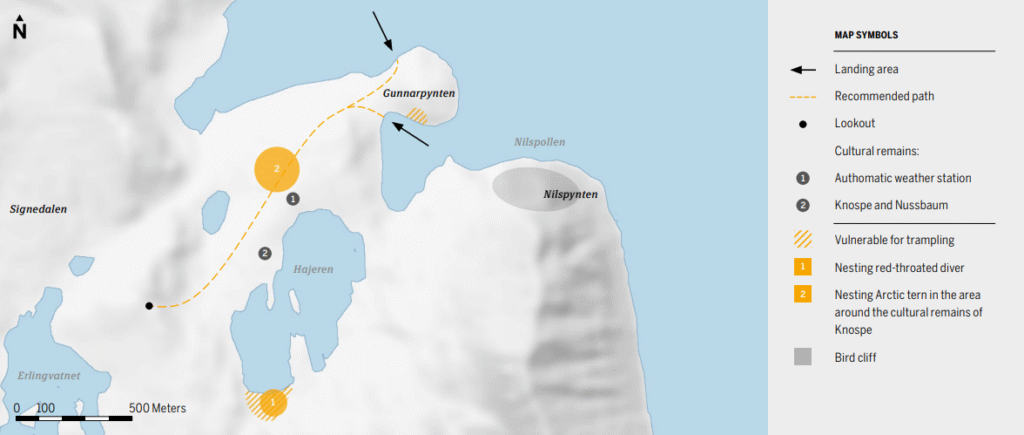
79°16.3’N 011°32.1’E
Vegetation
The vegetation at Signehamna is quite ordinary, but very characteristic, and envelops the amazing and interesting landscape. The grey moss carpet covers large areas, and the presence of yellow reindeer lichen indicates that the area is not heavily used by reindeer. Polar willow and wood rush are the dominant flowering plants. The walk from landing site up to the cultural remains passes through a perfect polygonal ground, and the shape of the stone ring is enhanced by vegetation in different colours. One population of the redlisted plant Mossy Mountain-heather occur near the beach.
Fauna
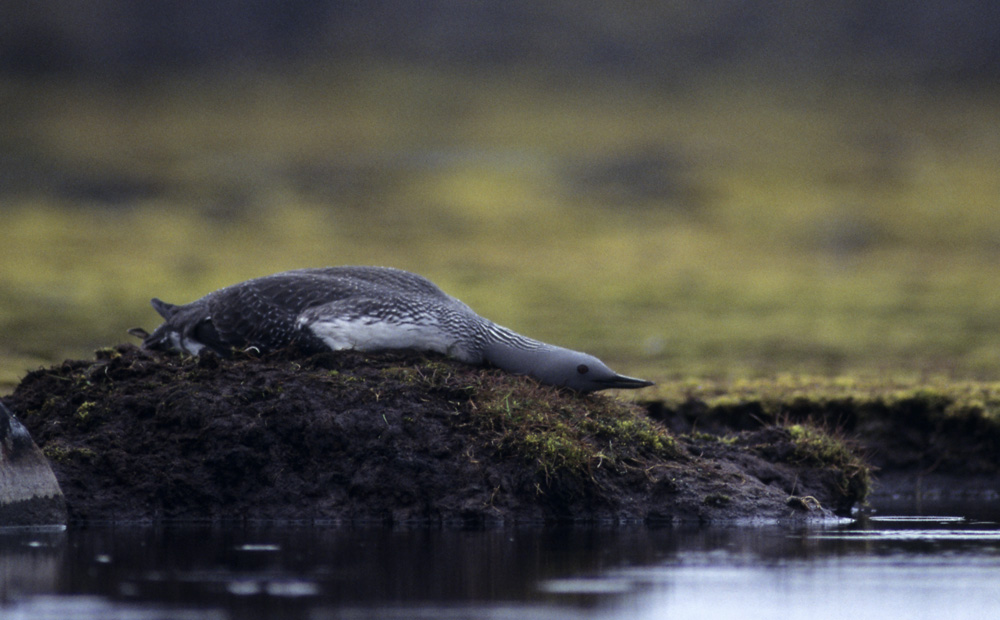
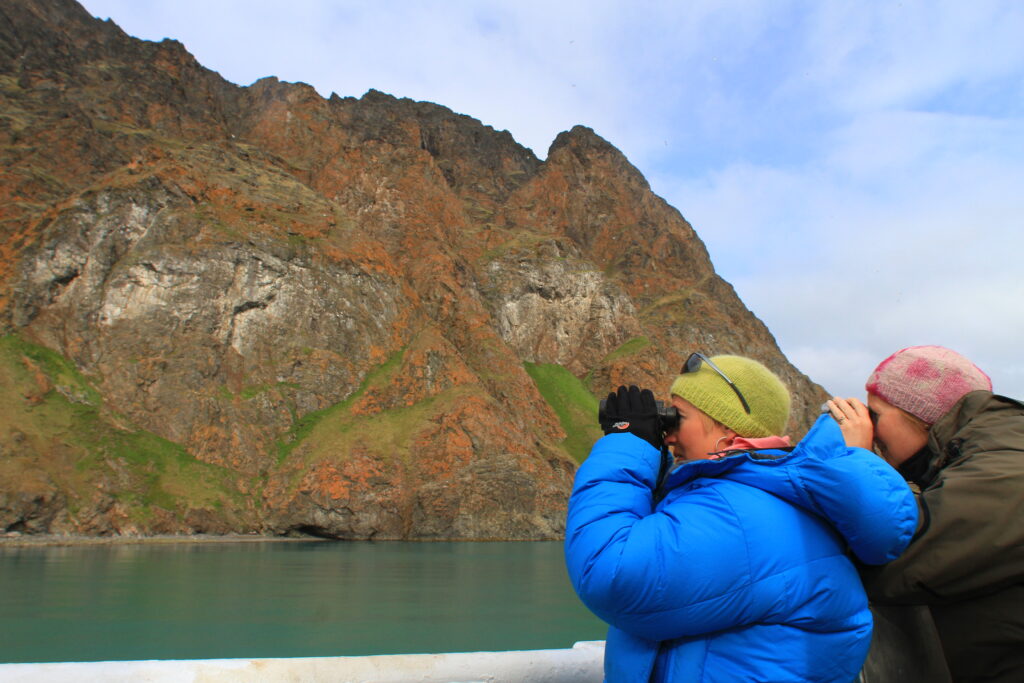
The bird cliff, Nilspynten, holds thousands of seabirds, dominated by Brünnich’s guillemot and black-legged kittiwake. The lakes and their direct surroundings feature breeding red-throated diver, Arctic tern, Arctic and great skua, barnacle goose and purple sandpiper. Black-legged kittiwakes from Nilspynten use the lakes as a bathing place.
Cultural Remains
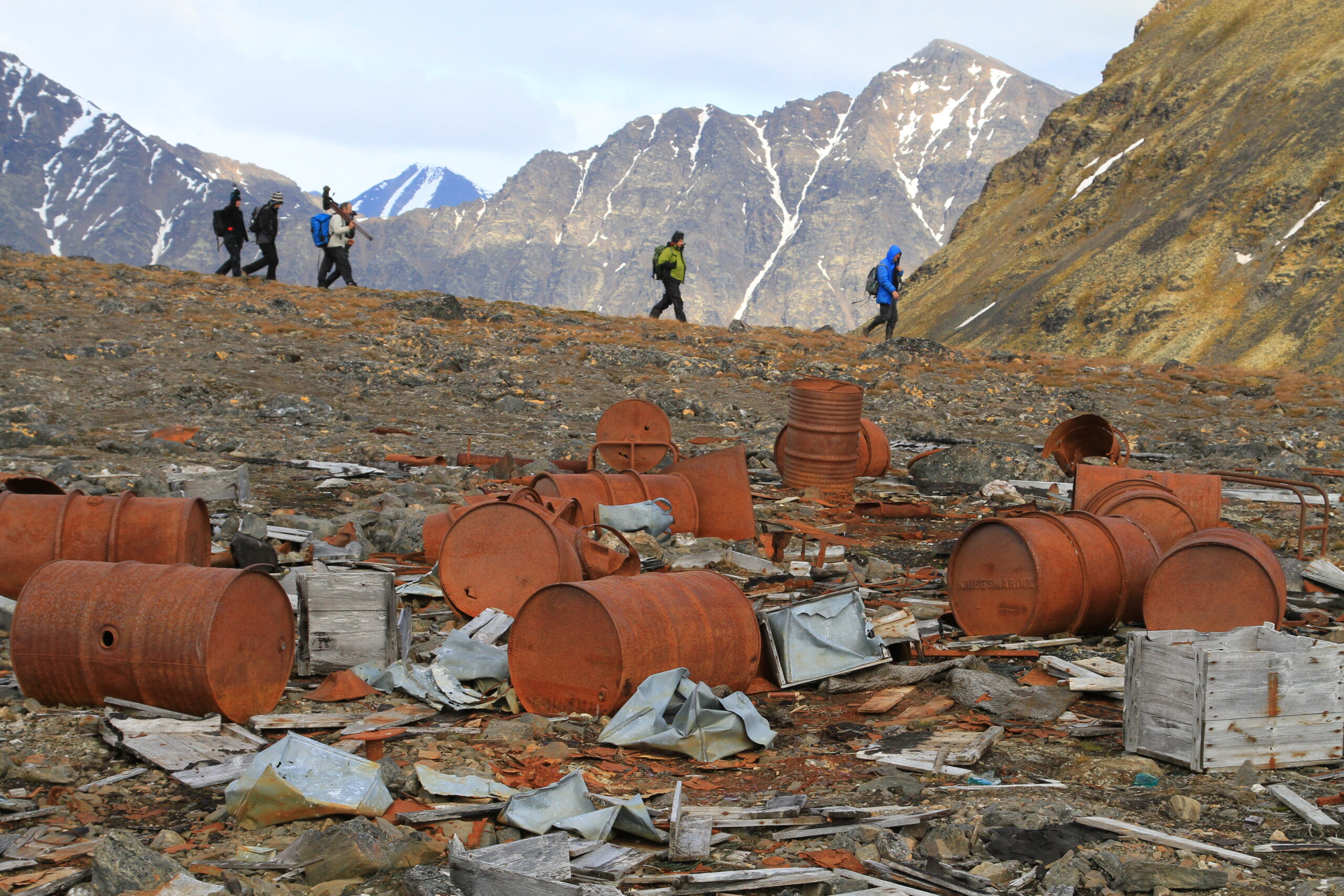
Supporting legs to an antenna and remains of batteries lie on a ridge not visible from the fjord. By Lake Hajeren lie the remains of the manned weather stations, Knospe and Nussbaum. Large amounts of technical equipment, domestic utensils, personal outfits, fuel barrels and bits of tent canvas from the station building is spread around on the ground.
Guidelines
- Do not enter the ruins of Knospe and Nussbaum. Watch from a distance to avoid damaging the fragile remains.
- Please do not pick-up or in any way rearrange any of the small and larger objects at this site.
- If the terns attack, walk away while watching where you step to avoid trampling on eggsand chicks.
Tip
An approximately one kilometer hike from Knopse and Nussbaum in a westerly direction will bring you to a hill from where you will have good sight of three freshwater lakes, as well as a view of Signehamna with the Lilliehöök glacier as a backdrop.
AECO’s site-specific guidelines are reviewed by the Governor of Svalbard and funded by Svalbard Environmental Protection Fund.