Sundneset
Søraust-Svalbard Nature Reserve – named after one of the leaders of the Muscovy Company.
Last update: 30. June 2026
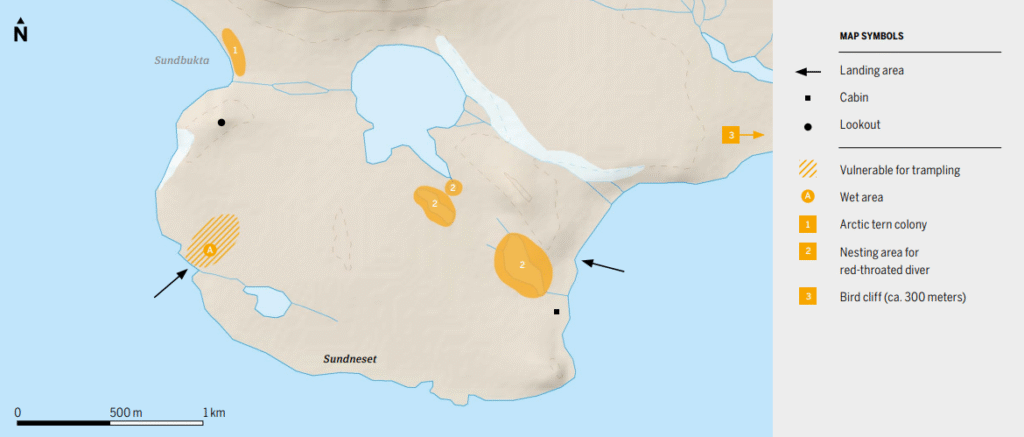
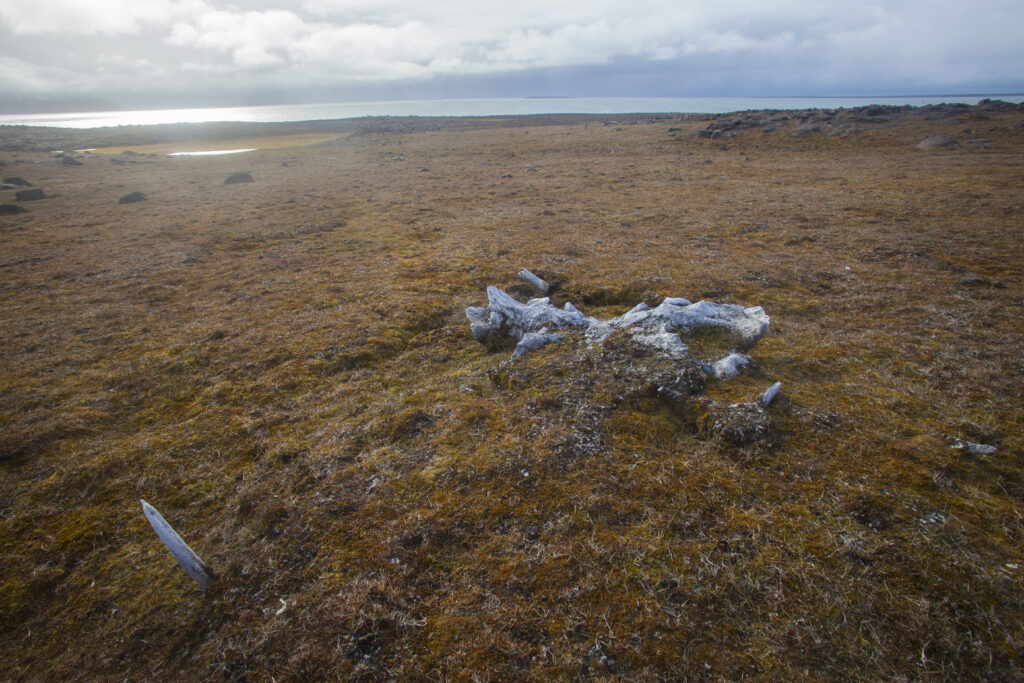
Whether you land on the eastern or the western side of Sundneset, the area will strike you as welcoming for walks. And it is. Walk to get a view of the freshwater-ponds that also attract birds, or head for the hill east of Sundbukta, for a nice view of the bay. But as you walk, allow time to look at the many whale bones scattered in the area. They are several thousand years old and remain from a time when the shoreline looked quite different.
Download PDF
78°12,3’N 021°03,8’E
Vegetation
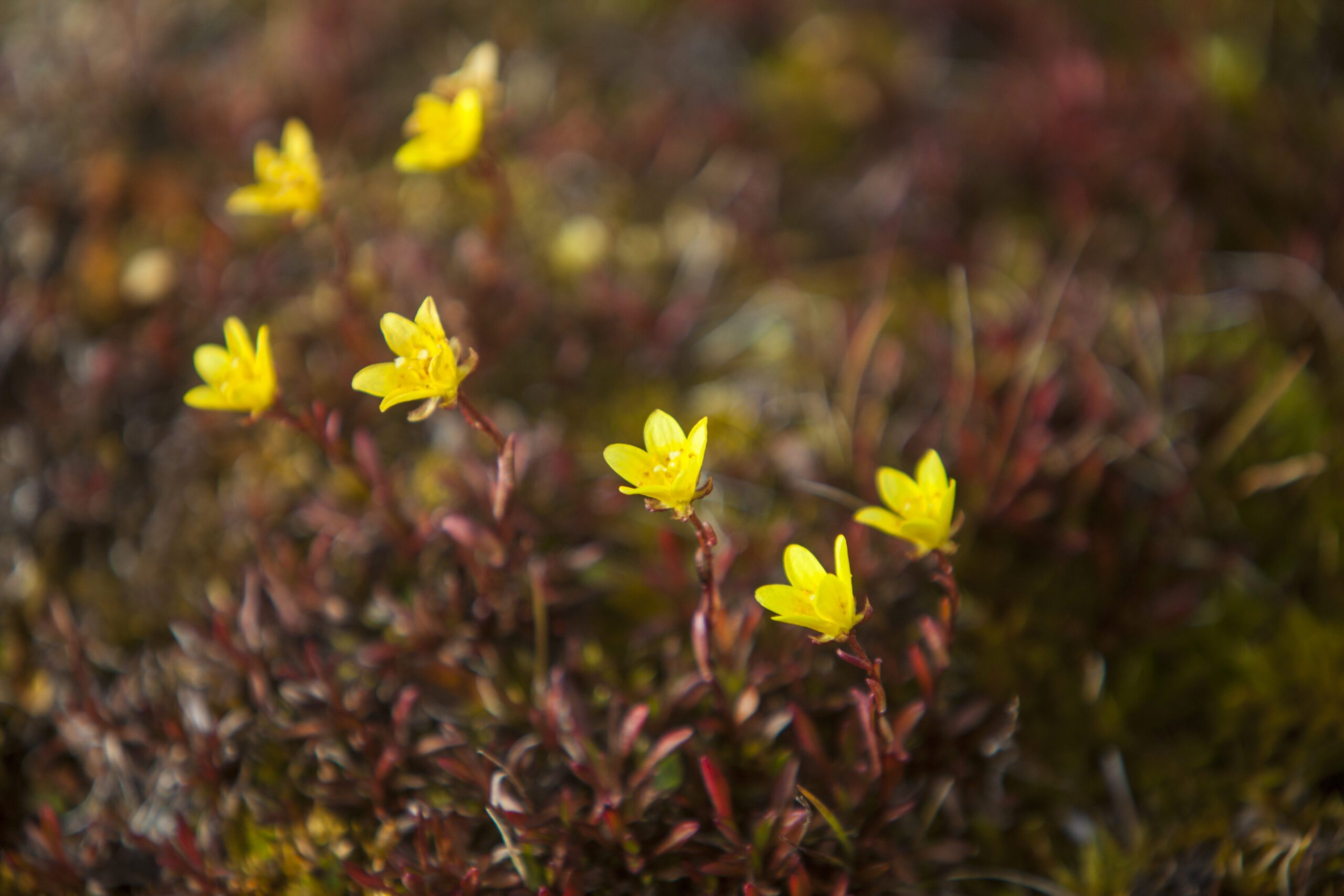
Snow-depth and topography are very important ecological factors for distribution of vegetation and species composition. This can be observed in the heath vegetation at Sundneset. In the leeside, offering a reliable snow cover every winter, a continuous vegetation cover is dominated by mosses, and species like mountain avens, arctic foxtail and wood rush. The ridges are exposed to wind and an unreliable snow cover, and are dominated by lichens and areas of naked soil. The wet depressions are green spots in the landscape, due to the moss-dominance, and can be really soaking if you venture into them.
Fauna
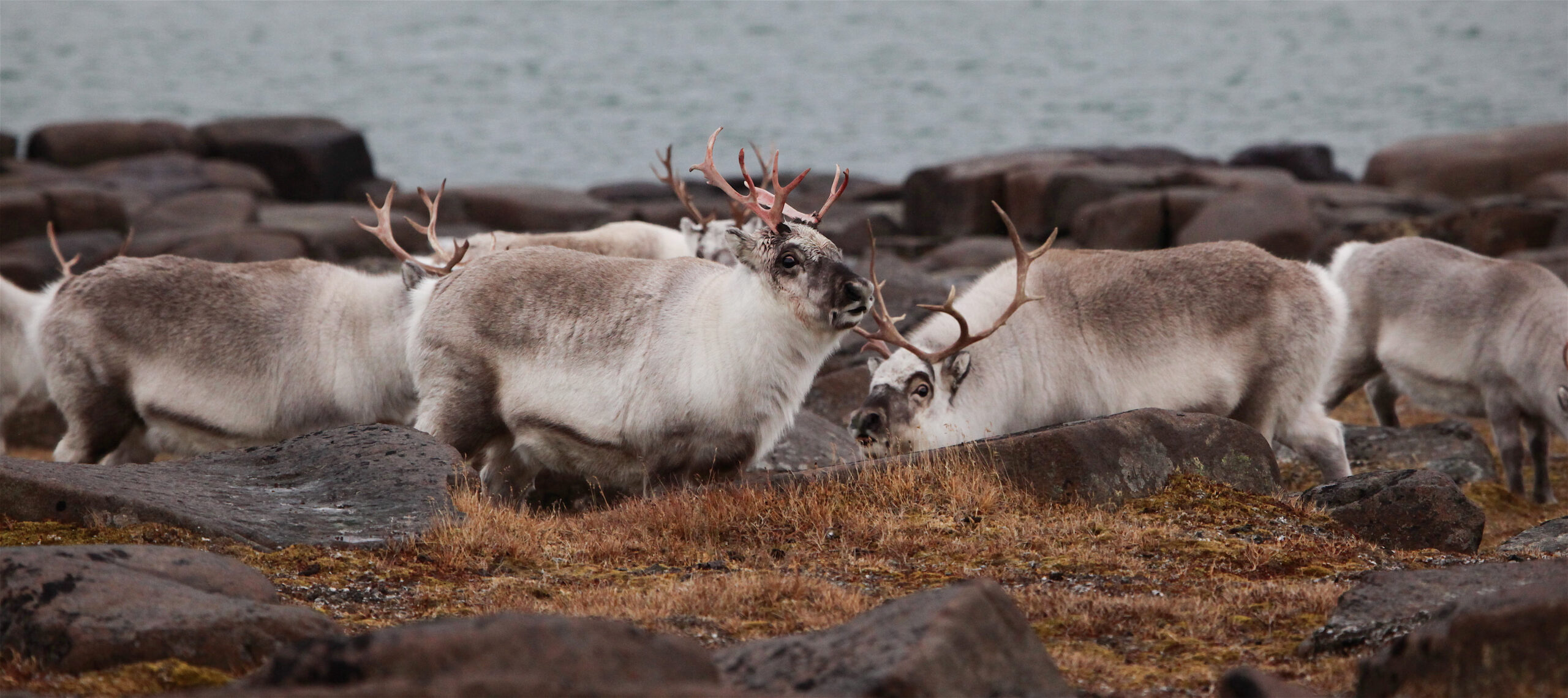
The area is a rich and important feeding area for geese and reindeer. The lakes contain breeding red-throated divers, king eiders, grey phalaropes and long-tailed duck. In the small bird cliff east of the cabin a few pairs of barnacle geese are breeding together with black guillemot, glacous gull and snow bunting. In the shallow sea along the coast one may encounter several hundreds of molting eiders in the autumn.
Cultural Remains
Located in a tiny bay on Sundneset is the cabin called “Würtzburger Hütte”. The cabin was built in 1959 for the geo-scientific expedition led by the German geographer Julius Büdel. The cabin was seasonally in use to do geo-morphology research until 1967. The cabin is well preserved.
Guidelines
- Remember to always approach a landing site calmly and carefully.
- Please keep a distance to the small lake during June and July to avoid disturbing the breeding red-throated divers.
- Avoid the bird cliff before July 20th to avoid disturbing barnacle geese on their nests.
- Walk outside the verdigris green and wet vegetation in depressions and around the lakes, as this has low tolerance to trampling and you will get soaking wet and muddy.
- You are welcome to visit the cabin unless it is occupied. Remember to close the door behind you when you leave.
Tip
In addition to the beaches east and west of Sundneset, it is also possible to land in Sundbukta.
AECO’s site-specific guidelines are reviewed by the Governor of Svalbard and funded by Svalbard Environmental Protection Fund.