Nordre Russøya
The northern part of Russøya where a Russian cross and a hut was built by Russian trappers.
Last update: 30. June 2026
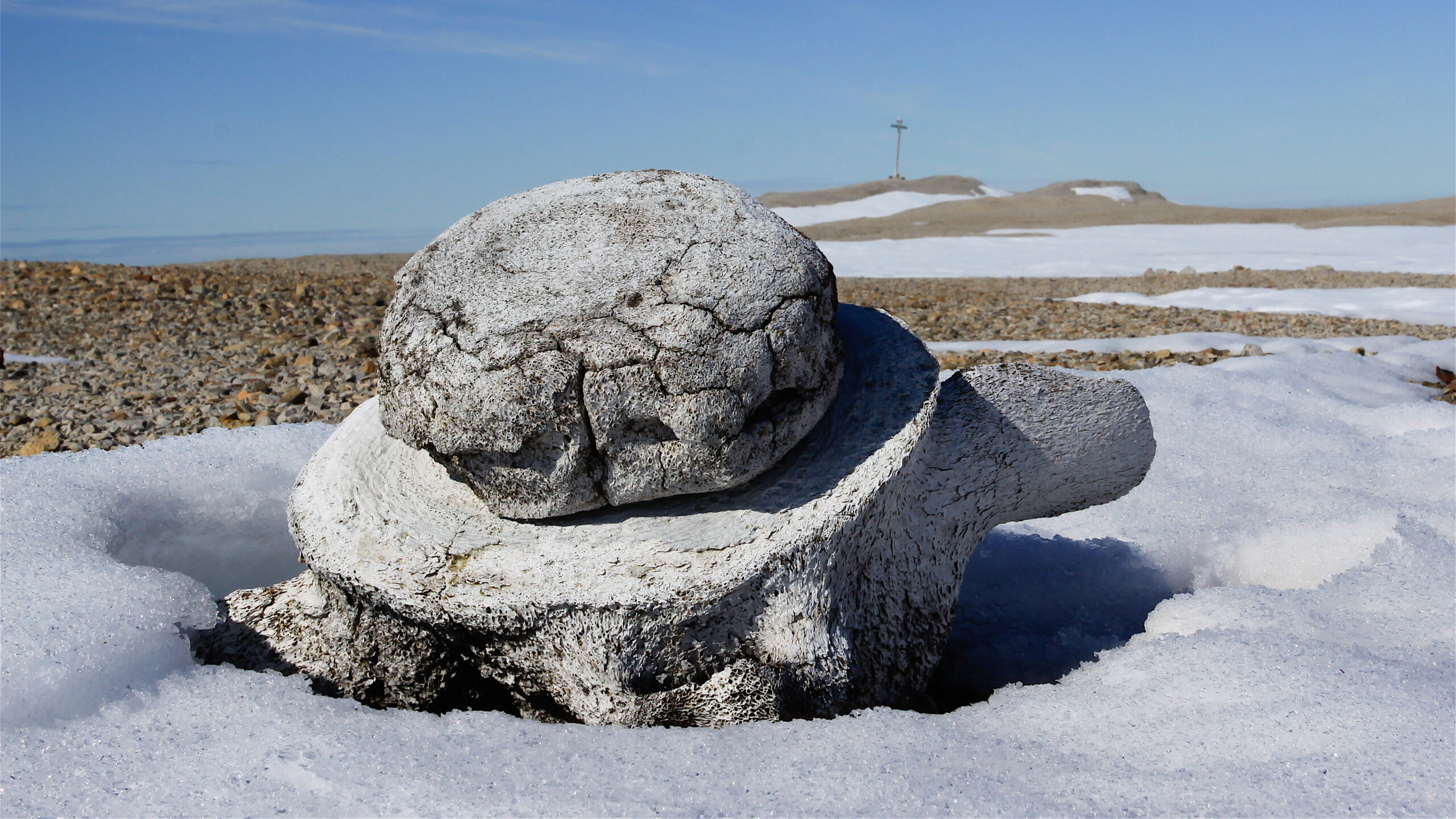
This unique Russian Orthodox cross was erected to elicit protection from higher powers, to bring luck in trapping, to mark territories and graves and serve as navigational markers. These large wooden crosses were once raised in numerous places along the coasts of Svalbard, but today only the bases of the crosses remain. The exception are the two crosses still standing in Murchinsonfjorden, the one here at Nordre Russøya and one other at Krossøya.
Download PDF
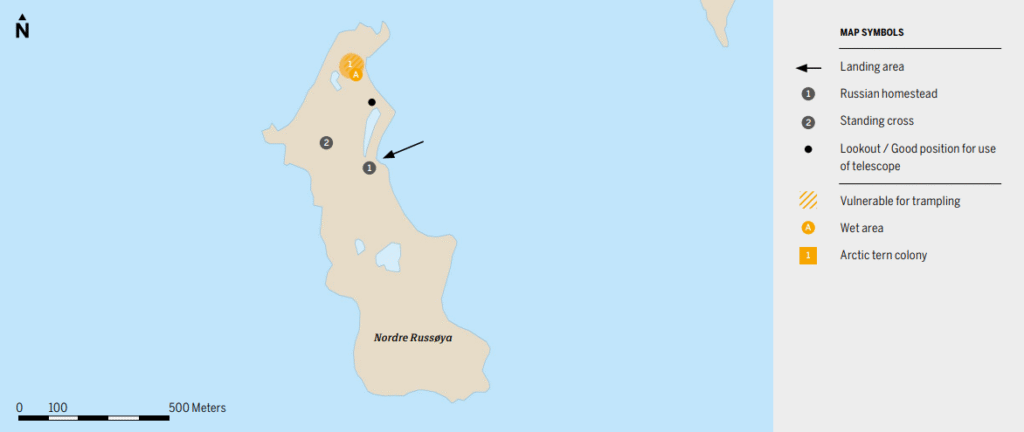
80°0,2’N 018°8,5’E
Vegetation
Where have all the flowers gone? Definitely not to Nordre Russøya. This and the neighboring islands in the outer Murchisonfjorden consist of flaked stones of dolomite rock, created by heavy frost weathering. The only vegetation present are at the nests of common eider and brent geese, due to input of nutrients from the bird-droppings, and the green moss layer surrounding the ponds and the house ruin.
Fauna
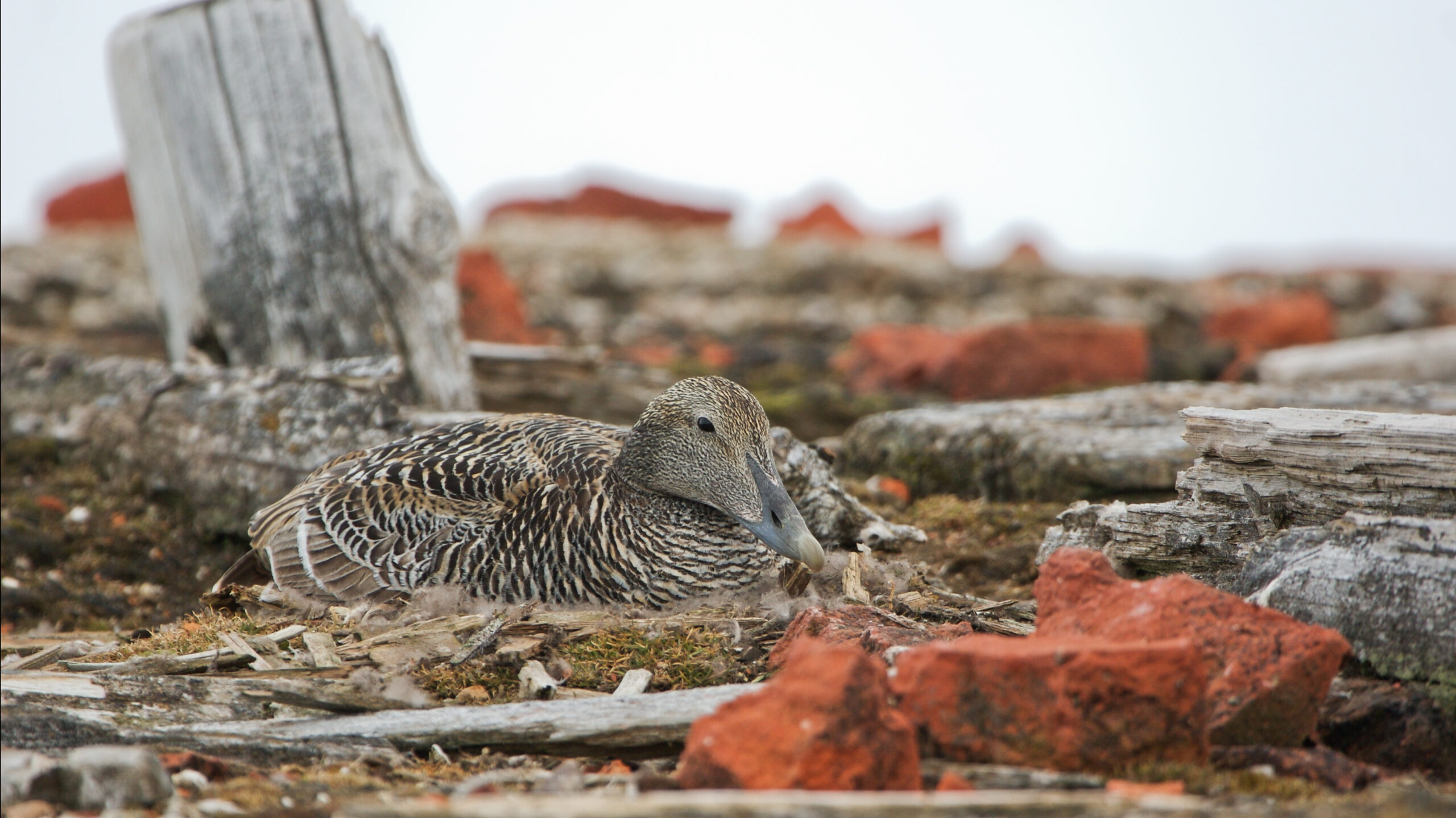
The bird fauna on the site is rich and varied. Brent geese, common eider, red-throated diver, purple sandpiper, grey phalarope, Arctic skua and Arctic tern breed here. The beach, with the connecting small ponds, is an important habitat for many of these birds. Brent geese and common eider also frequent other parts of the island. Ruddy turnstone, great skua and glaucous gull also forage in the area.
Cultural Remains
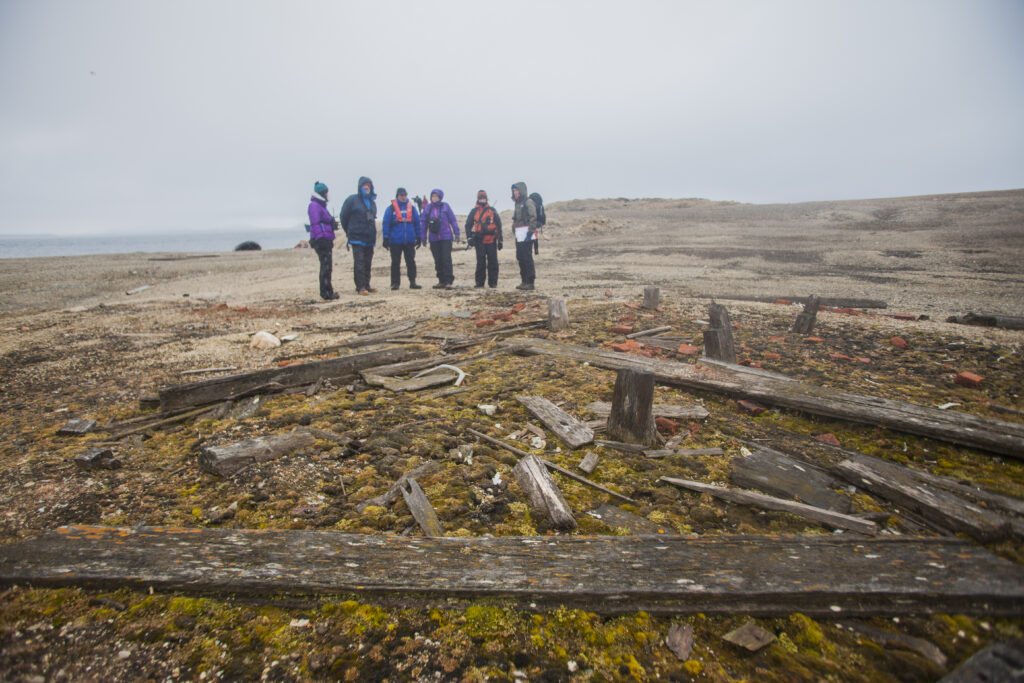
One of only two standing Russian orthodox crosses is situated on a high ridge on the northern part of the island. A small Russian trapping station is located close to the beach east of the cross. The station was built with cogged joints, and features the unmistakable red brick of the open fireplace. A true sign of a Russian station! Around the station are rubbish heaps with bones from birds, fish and other animals.
Guidelines
- To avoid disturbance of ground-nesting birds it is not recommended to land on the island until after August 1st.
- Restrict landings to the area marked in the above map.
- If brent geese and common eider are flushed from the nest it is advisable to leave.
- Retreat if the Arctic skuas and Arctic terns attack while watching where you step to avoid trampling on eggs and chicks.
- Observe the house ruin from a perimeter and avoid tramping on the remains.
- Please do not pick up or in any way rearrange any of the small and larger objects at the Russian hunting station.
Tip
Bring your binoculars to enjoy the rich birdlife without disturbance.
AECO’s site-specific guidelines are reviewed by the Governor of Svalbard and funded by Svalbard Environmental Protection Fund.