Sallyhamna
A sheltered, natural harbor right on the North-West corner of Spitsbergen.
Last update: 30. June 2026
Sallyhamna ticked off all the needs for the earliest whalers. Some of the best preserved cultural heritage from the hey-days of bowhead whaling of the 17th Century are found here. Visitors will leave the place with a vivid imagination of the hardships of flensing the whale, rendering down blubber to oil and preparing the barreled oil for shipment to mainland Europe.
Download PDF

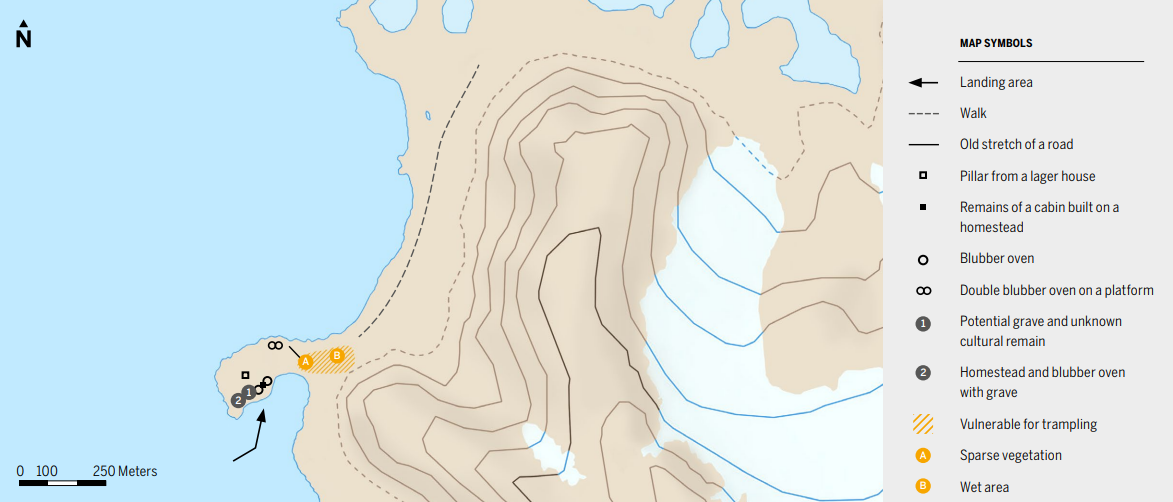
79°49.00’N 011°35.7’E
Vegetation
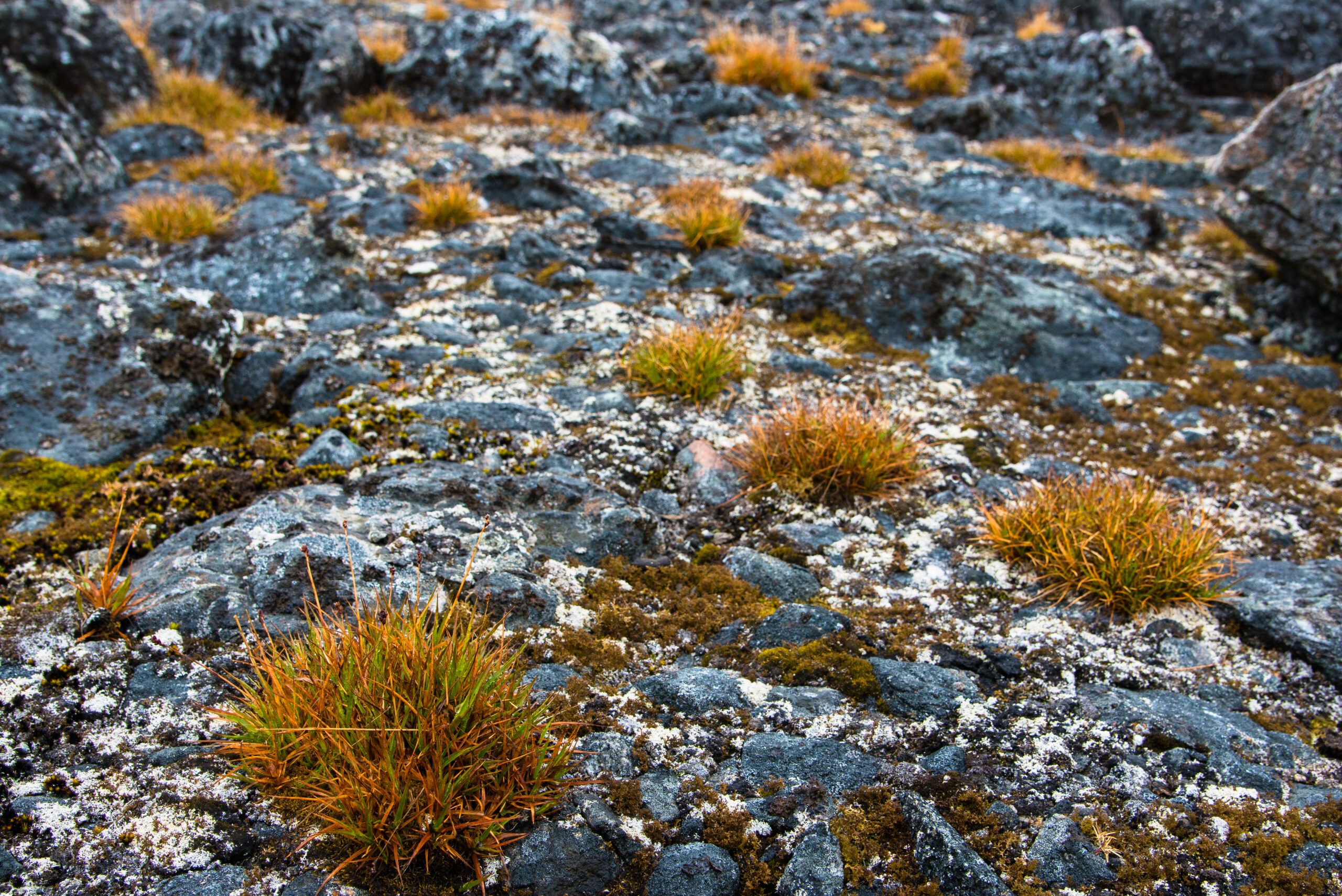
We are far north, and the harsh and extreme conditions are easy to read in the vegetation. In the barren land, we see small patches of lichens, mosses, and single turfs of flowering plants. All plants are specially adapted to survive and reproduce during the short and cold summer. The Northern wood-rush is a characteristic species and a true survivor, with its bashful dark flower heads on long stems. Lichens growing on stone are long-lived and slow growing, and will survive even if the snow remains on the ground during the entire
summer some years.
Fauna
This area holds relatively few species and low numbers of birds and animals. A few pairs of Arctic terns, Common eiders, Arctic skuas and Snow buntings, breed close to the point.
Cultural Remains
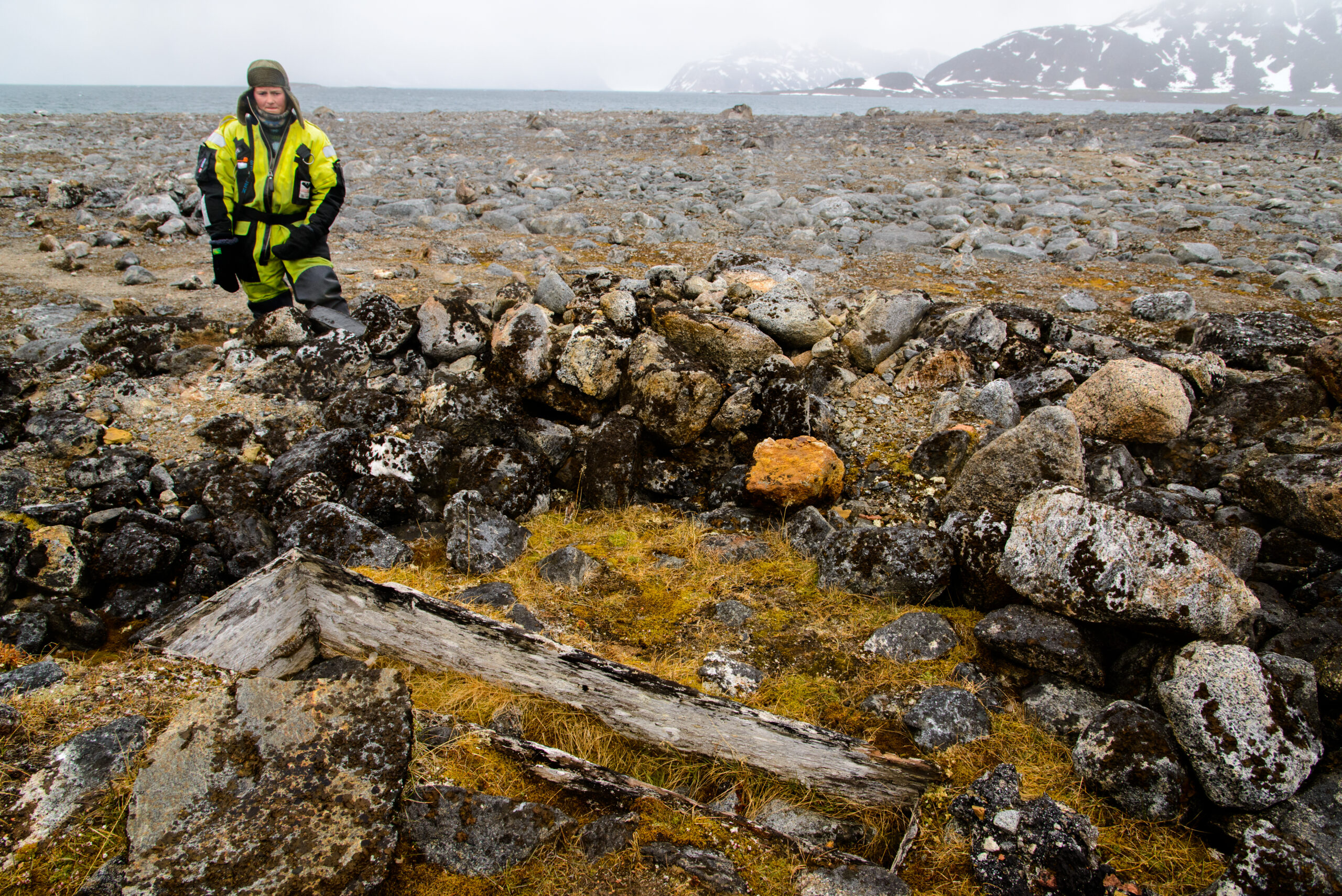
This harbor shelters one of the major whaling stations in Svalbard. Three large, single and one double blubber oven dot the shoreline. The site also includes remains of houses and tent rings from the whalers living quarters and foundations for cooling and cleansing of the oil. A crude road through stony ground was built to facilitate the work. A burial was later placed in center of two of the ovens. In 1937, 300 years later, a trapper’s cabin was built by Waldemar Kræmer in one of the whaling house remains. He overwintered here with Sally until 1941.
Guidelines
- Avoid trampling in the small spots of wet vegetation
- Look out for Common eider and Arctic tern nests.
- Observe the remains of the blubber ovens and graves from a perimeter, and do not walk on them. People have earlier walked and made paths. Please do not follow their example.
- Respect privacy if the cabin is in use
Tip
This is a small site and it is a good idea to bring small groups of people at a time. One way of entering Sallyhamna is the scenic hike from Svenskegattet, approximately 2,5 km across partly uneven and rocky terrain.
AECO’s site-specific guidelines are reviewed by the Governor of Svalbard and funded by Svalbard Environmental Protection Fund.