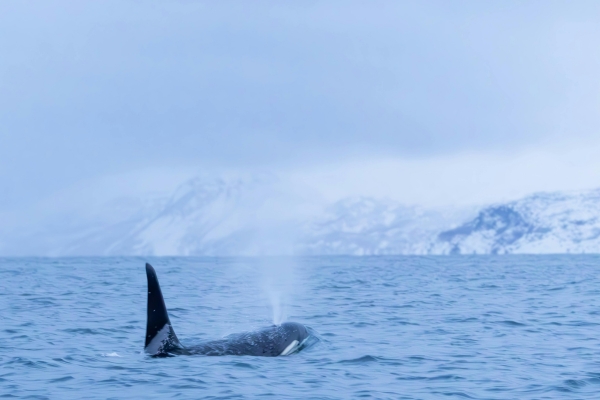
Protecting Marine Life in the Arctic
Steve Jones has spent nearly a decade at ORCA building partnerships with the shipping industry to advance marine conservation. In this interview, he explains how ORCA uses citizen science and collaboration to protect whales, dolphins, and vulnerable ocean habitats.
Q: What is ORCA’s mission?
A: Our mission is simple: we want to see oceans alive with whales and dolphins, and we know that the only way to achieve that is to give everyone who cares about them a chance to play a part in protecting them.
Q: What’s your strategy for achieving this?
A: We focus on using platforms of opportunity—ships that are already traveling the ocean—to study and understand populations in different parts of the world. Using citizen science, we can identify important habitats and hotspots and help keep them safe.
Remote destinations like the Arctic are the perfect example of how impactful this work can be; some of the only ships visiting this area are cruise ships. Using them to conduct research is an incredibly effective way to study these areas.
ON THE BRINK
Threatened by climate change, fishing nets, shipping traffic, and vessel strikes.
The North Atlantic right whale is one of the most endangered whales in the world.
Q: Which species are most at risk today?
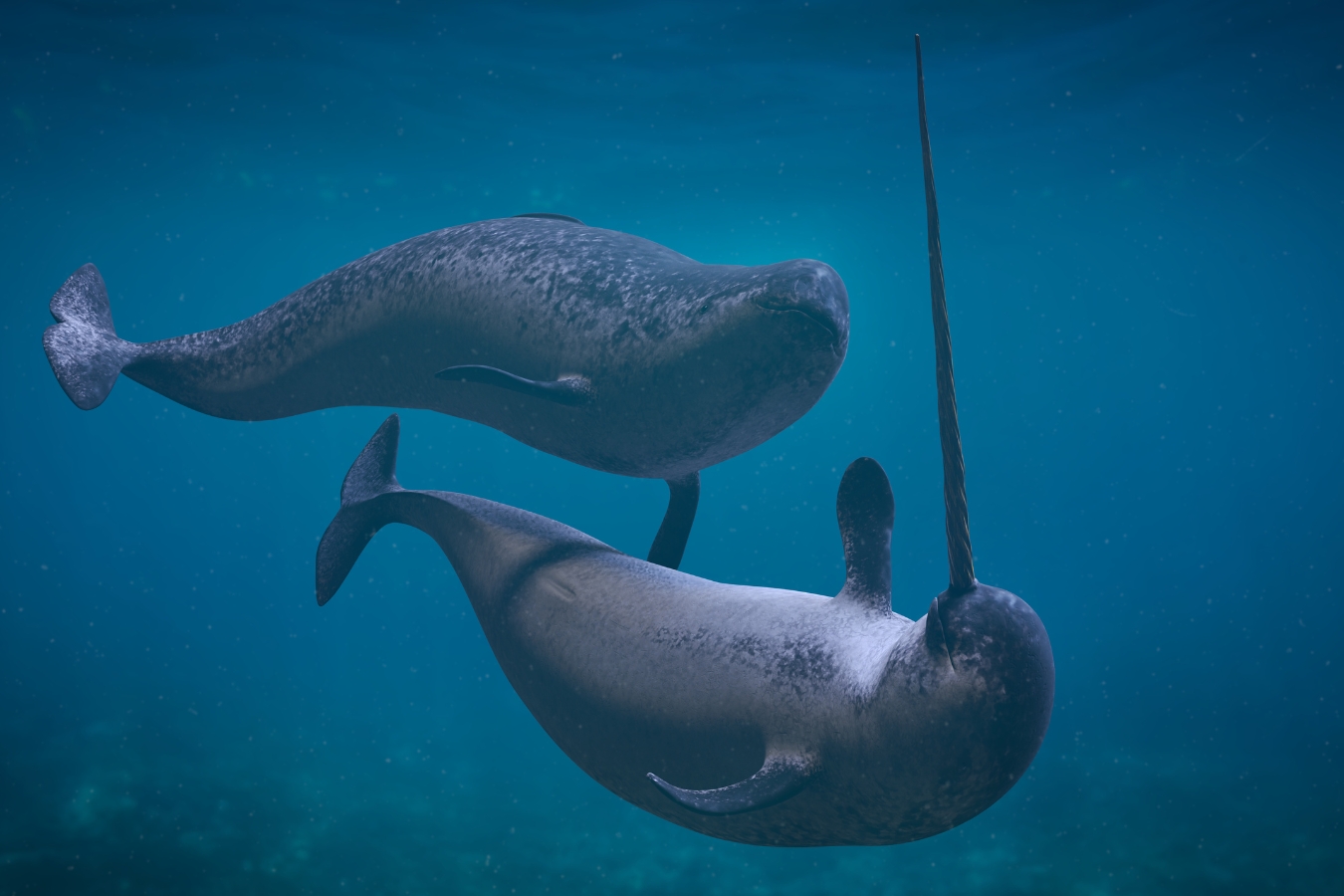
A: Unfortunately, most species are facing some kind of conservation threat. In Arctic waters, commercial whaling is a very real threat for minke and fin whales. In Greenland, there is increasing concern that subsistence hunts are becoming commercial, with tourists being targeted to buy whale meat, narwhal tusks, and carvings of whale bone.
The North Atlantic right whale is one of the most at-risk species in Arctic waters, hunted to the brink of extinction due to historic commercial whaling—the animal gets its name from being the “right whales to hunt.”
Today, they face increased threats from entanglement in fishing nets, separation from their calving areas due to high shipping traffic, and even direct collisions with ships. Recovery is incredibly slow, so increasing protections for them is vital.

Q: How is climate change affecting their lives?
A: Climate change has made the Arctic more accessible. Where previously it used to be closed off to most vessels for a large part of the year due to sea ice, now the extent and thickness of that ice is decreasing. Recent reports show an increase in vessel traffic in Arctic waters during a ten-year period. This exposes whales in the area to higher levels of underwater noise generated by ships (one study found underwater noise doubled in some parts of the Arctic between 2013 and 2019), and increased risk of being hit by them.
The Arctic is home to animals uniquely adapted to survive in such conditions. To have enough energy and insulation to survive in freezing conditions, they need to efficiently forage huge amounts of food. However, despite their impressive adaptations,whales are now facing the consequences of human activities that are changing the ocean.
Q: Do Arctic whales act differently than those elsewhere?
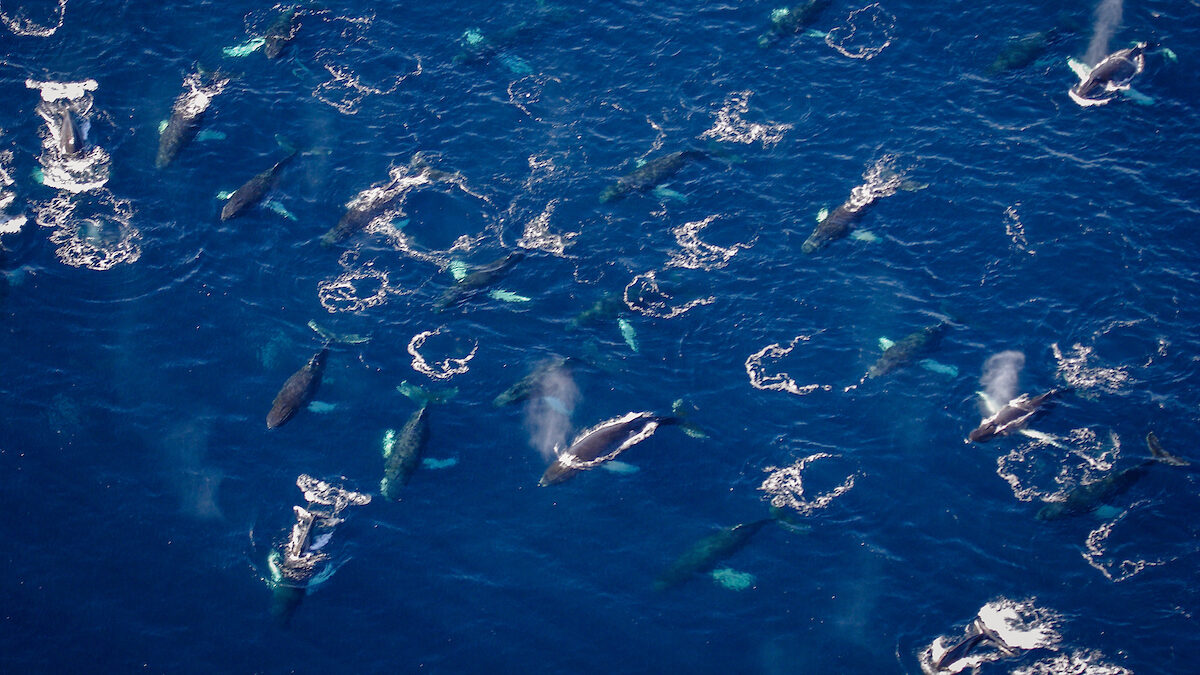
A: Yes and no. Many of our large whale species—humpback, blue, fin whales—migrate. Migratory baleen whales, like those listed above, will generally spend the warmer months in the Arctic and move to tropical waters to breed. Humpback whale migrations are around 5,000 miles.
However, the record goes to gray whales—in 2015 a female was reported to have traveled 13,988 miles in 172 days (from Russia to Mexico and back again).
Bowhead whales, by comparison, spend all their time in Arctic waters, due to their huge, bony skull (allowing them to break through the ice to breathe) and thick layers of blubber.
In sperm whales, the mature adult males migrate to higher latitudes (closer to the poles) during the summer months for feeding on squid. In the breeding season, they travel to lower latitudes, where they interact with female and juvenile groups. Male sperm whales are therefore significantly larger than their female counterparts. We also see a greater variety of dolphin species in warmer temperate waters compared with colder Arctic waters, although these animals do tend to be smaller.
RISING RISKS
Vessel traffic up 37% in a decade.
The increase in vessel traffic in Arctic waters between 2014 and 2024, has raised the risk of ship strikes for whales.
Q: How do they communicate with each other?
A: Sound is the primary sense for whales and dolphins. In water, sound travels 4.5 times faster and 60 times farther. Although whales and dolphins have okay eyesight, many of them live in murky waters or spend time diving to great depths where there is no sunlight, so they have evolved to use sound as their primary sense.
Large baleen whales use low-frequency sounds to communicate vast distances. These come in a variety of sounds called units that make up a phrase, and these in turn make up a theme—known as songs.
Perhaps the most iconic is the humpback whale—the great composers of the sea. Male whales sing long, intricate songs that can last for hours. These songs aren’t fixed—new phrases appear, old ones vanish, and the song spreads across ocean basins like a cultural wave.
Why do whales sing? Mostly for mating: to attract females and compete with other males. But the content is learned, not invented. Each whale copies his neighbors, and together they evolve the song. It’s whale pop music—trends that rise and fade across the ocean.
Dolphins and toothed whales produce short frequency noises through their nasal sacs, which are amplified by a fatty organ called the melon. They produce a sequence of clicks and whistles used in communication and to find their food through echolocation. Belugas, for example, produce a variety of calls, sometimes said to sound like a creaking door, as well as clicks, chirps, groans, whistles, squeaks, and squeals. This has earned them the title of “sea canary.”
The mystery of whale communication is still in many ways exactly that—a mystery. However, we know that young animals, unlike humans, babble as they are trying to make full-formed “words” and “sentences.” It can take one to two years to develop more complex calls. Bottlenose dolphins take it a step further. Each individual develops a signature whistle—effectively a name. Dolphins can call themselves or each other.
And fun fact: the bottlenose dolphins off the coast of Wales have distinct whistles—essentially a Welsh accent. Researchers can identify them just by listening. With whale song, the picture is less clear, but recent research from St Andrew’s suggests there might be more similarities to human language than we thought. We also know that whales and dolphins use “body language”—breaches, tail slaps, etc.—to communicate, so there’s a really big puzzle to uncover, which is why studying whales and dolphins is so exciting.
Q: What’s the easiest way to spot whales and dolphins?
The first great sign of whales isn’t a whale at all—it’s birds. Birds have much better eyesight than we do, but because they’re in the sky, they’re easier for us to spot. Circling birds is an indicator that they’ve spotted something in the water. Food for the birds equals food for whales and dolphins.
For larger whales, look out for their blow—a large puff of air that looks a bit like steam rising as the whale exhales. You also want to look for any splashing in the water for both whales and dolphins, which is a good indication that there’s food in the area.
Q: How does their behavior reflect their health and environment?
These animals’ behavior can give us clues as to the importance of that area, and therefore is a good indicator of overall environmental health. For example, humpback whales are known for a phenomenon called “bubble net feeding,” where whales join together to trap fish in a net made of bubbles.
Lots of large whales feeding in an area is a good indication of productive waters. Whereas lots of breaching and splashing could be breeding behavior, so the area may be particularly sensitive.
However, particularly when approaching from boats, it’s important to look for changes in animals’ behavior which may be indicators of stress.
Q: How can we tell if they are stressed?
A:When approaching marine mammals—even from a safe distance—it’s important to recognize signs of disturbance. For cetaceans, watch for:
– Head or tail slaps: Aggressively hitting the surface, sometimes repeatedly
– Trumpet blows: Sharp exhales (mainly in large whales)
– Increased swimming speed: Often an attempt to move away from the vessel
– Shielding calves: Mothers positioning themselves between the calf and the boat—never get between them
– Rapid breathing: Elevated breathing rate, a sign of stress
– Sudden or erratic movements: Attempts to evade the boat
– Bunching: Animals grouping tightly together, often dolphins or mother-calf pairs
– Repeated breaches: Can indicate stress or aggression, not just play
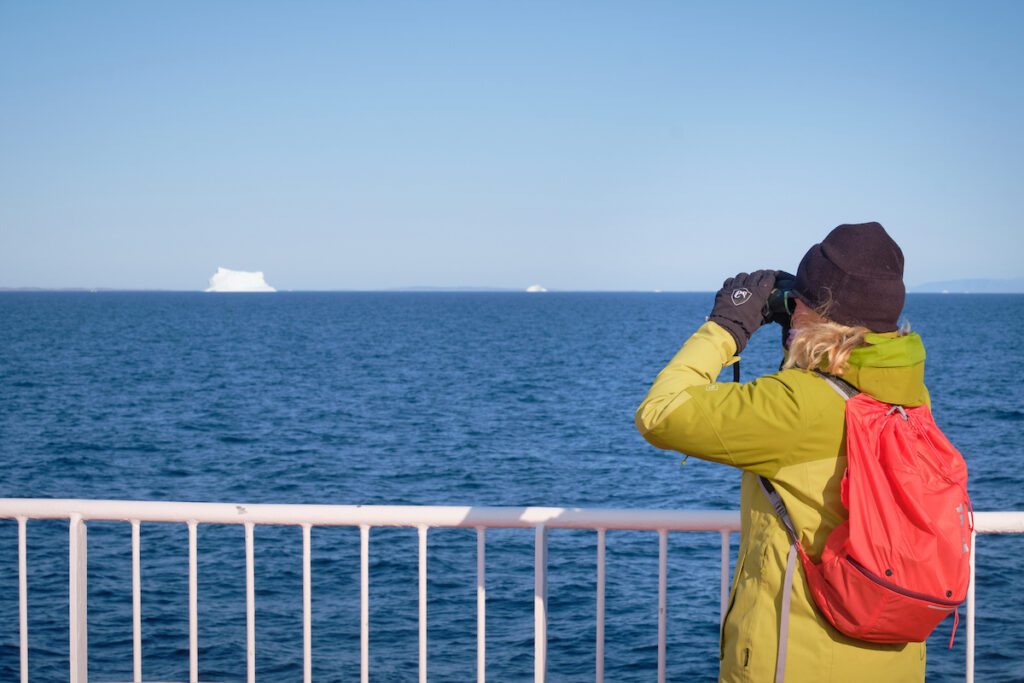
This is not to say that you shouldn’t go whale watching—it’s an incredible thing to do and the experiences can be breathtaking. However, it’s important to consider responsible whale watching guidelines, and remember that these rules apply regardless of whether you’re in a motorized boat, kayak, paddleboard, etc.
The trick is to create as little disturbance as possible and for encounters to be “animal-led”—if the animal is stressed, move away, but if the animal is happy, you can watch respectfully (and if you’re lucky, they might be inquisitive enough to come and say hello).
Q: How does ORCA work with expedition cruise operators?
A: It ranges from conducting monitoring work onboard to developing crew training programs to help reduce risk to whales and dolphins in polar regions. We’ve developed ship strike mitigation courses to help companies reduce the risk of collision with whales, responsible whale watching training to help guides behave safely and respectfully around wildlife, and even train expedition guides to collect data around the world to feed into ORCA’s dataset.
RESPONSIBLE WHALE WATCHING
Watch for signs of stress such as rapid breathing, shielding calves, and erratic movements.
Stay at least 100 meters away, approach at “no-wake speed,” and spend a maximum of 30 minutes with an animal, or 15 minutes if there are two vessels. Never approach directly from in front or behind.
Q: What tools do you provide for guides in the Arctic?
A: One of the things ORCA is best known for is the OceanWatchers app, used all over the world by expedition teams and bridge officers to collect sightings of whales and dolphins. This app, which works offline in every corner of the world, is already part of large conservation projects in areas from Antarctica to the Arctic, and the network of guides using it to collect data for ORCA is growing.
ORCA’s polar vessel strike training is another resource that’s important for those traveling through the Arctic, helping vessels understand the unique risks of ship strike in polar waters and helping to map some of the key challenges in operating safely around whales in these critical habitats.
Q: Can individuals contribute to Arctic conservation?
A: Ultimately, we can’t protect something if we don’t understand it, so if anyone wants to protect the Arctic, the best way is to help us study it and understand it. Anyone can become an OceanWatcher and collect sightings data, and we offer any expedition guide the opportunity to sign up free of charge, giving them the opportunity to collect data during wildlife guiding so that they can give their guests a great experience while protecting wildlife at the same time.

Q: What’s the biggest challenge ahead for Arctic cetaceans?
A: Concerns about the growth in Arctic shipping is clearly a major challenge—with retreating ice, the viability of Arctic shipping for freight and cargo represents a significant threat to whales and dolphins.
Disturbance from growing shipping traffic and the risk of vessel strike of slow-moving species like bowhead whales means that any change to the way we interact with the Arctic is something that we need to think carefully about to minimize the impact on the critical habitats and amazing wildlife that calls it home.
Q: Can you share an example of conservation success?
A: I’d like to highlight an example from the other end of the world, to show what’s possible in the poles with the support of the expedition sector. In South Georgia, for decades whales were killed in one of the most ruthless slaughters anywhere in the world, and until the end of commercial whaling, the population in the Southern Ocean was truly decimated.
However, over the decades since, the numbers have begun to recover, and we are now seeing a very different set of circumstances—for the first time, recovering whale populations around South Georgia are so plentiful that there are concerns about how to safely manage shipping traffic in the face of such growth.
ORCA is working with the expedition sector, as well as with the British Antarctic Survey and other collaborators, to use cruise ships to study this habitat and inform new measures being put in place to make sure this recovery can continue unchecked.
AECO CONTRIBUTIONS
2024
AECO member vessels covered 19,514 kilometers and recorded 3,897 individual animals from 25 cetacean species.
2023
AECO members logged 15,584 kilometers, resulting in 668 sightings of 2,033 individual animals across 26 cetacean species. Thanks to their participation, Arnoux’s beaked whale and strap-toothed beaked whale were recorded for the first time in ORCA’s history.
Q: What’s the key tool for protecting wildlife right now?
A: New technology is emerging constantly, and whale and dolphin research is no different. There are likely to be exciting applications for AI, new camera technology, satellite imagery, and more—and all of these in the future may help us to better understand and protect wildlife.
But at the moment, we still rely on the most reliable piece of technology we have—our own eyes. That’s why getting as many people as possible to collect data is vital until these new technologies emerge and become viable for widespread study.

Steve Jones has worked with ORCA for nine years and is responsible for the partnerships with the shipping industry, highlighting the industry’s opportunity to embed marine conservation into their daily operations, from issues like vessel strike and reducing the risk of collision, to monitoring of vulnerable ocean habitats, or the role of tourism in ending captivity of marine mammals.

Last update: 05. February 2026