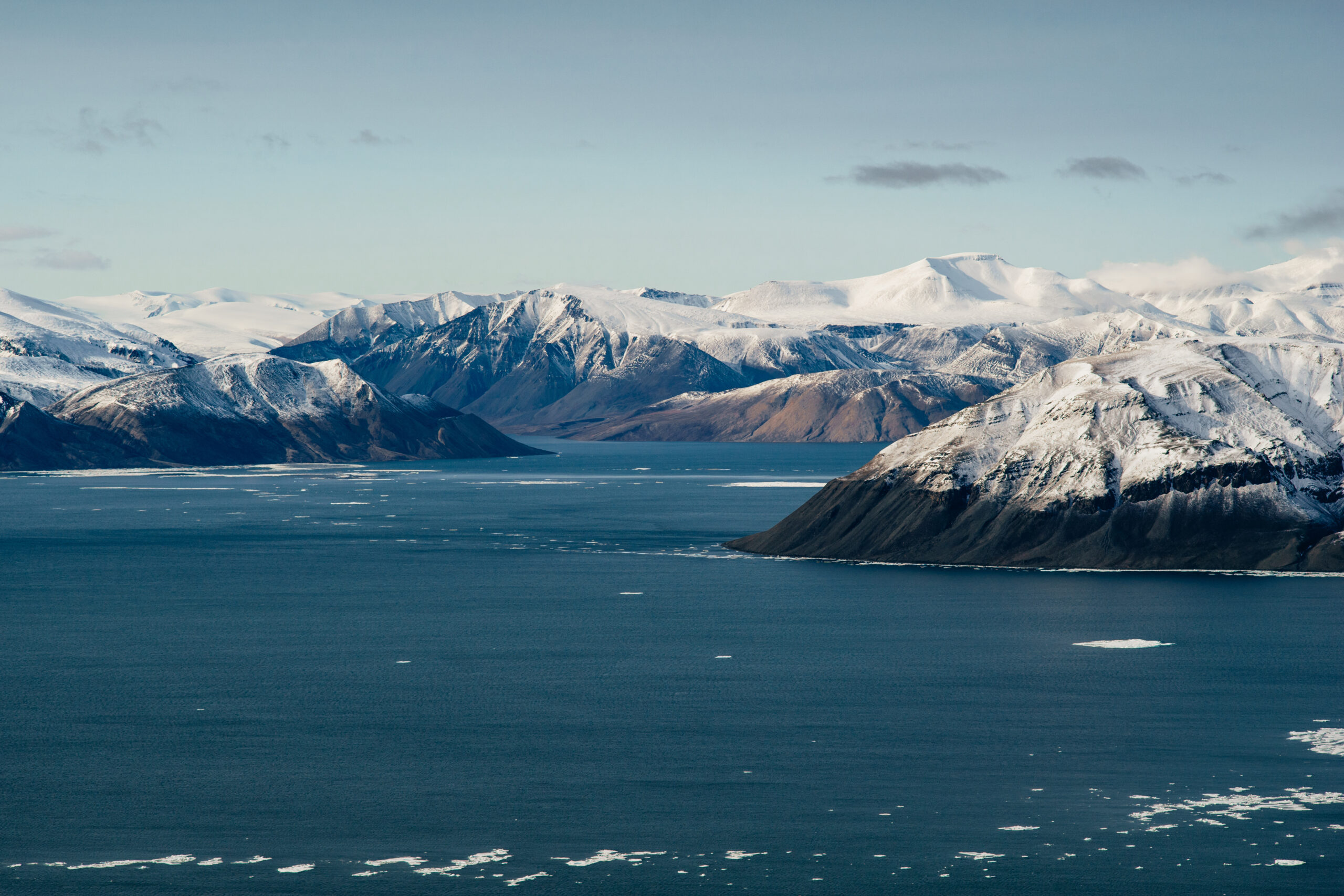
Understanding Underwater Sound
Joshua M. Jones is a project scientist at Scripps Institution of Oceanography, UC San Diego, specializing in underwater sound to study the marine environment. He has led Arctic research since 2006 on marine mammals and directs a community-based acoustic research network in the Canadian Arctic. Below, he explains how scientists study underwater noise and its effects in the Arctic.
Q: What kinds of sounds do we hear underwater in the Arctic?
A: Underwater, the Arctic is far from silent. Like a forest, the ocean soundscape is filled with many layers of environmental, biological, and human-made sounds that change through the days and seasons and that are different from place to place.
Environmental sounds are abundant in the ocean and include wind and waves, the movement and cracking of sea ice, and even earthquakes or underwater landslides. The Arctic sea ice itself is a rich sound source. As it forms, thickens, and breaks apart annually, sea ice produces a myriad of hisses, sirens, groans, screams, pops, booms, and many other sounds. With the whole sea surface covered in ice, this can produce a chorus of these sounds.
Icebergs produce sound continuously. Melting causes bubbles trapped under pressure within the ice to escape, producing a popping sound reproduced millions of times per day across the surface of a large iceberg. Icebergs regularly crack and break apart, adding a dramatic thundering sound to the soundscape they are drifting through. Frequent landslides in many fjords extend into the water, with the rockfall sending sound throughout the fjord and beyond.
Biological sounds are produced by many Arctic marine animals. For example, all Arctic marine mammal species use sound in some way for communication, for finding food, and for navigating within their environment.
The ice-breeding seals and walrus produce many sounds. For example, bearded seal males make long trill sounds beneath the ice during mating season. Individual males have their own distinctive repertoires of trills that they continue to use for many years.
Great herds of harp seals are nearly continuously calling with 20 or more different sounds during their migrations. Walrus produce patterned sequences of knock-like sounds, called codas, bell-like calls, and many other sounds. Bowhead whales make simple moan-like calls regularly while migrating and feeding and produce complex songs, similar to the songs of humpback whales. A song performance may be 20 minutes in length and can be heard by other whales from 50 km away or more.
Both narwhals and belugas produce abundant whistles and buzzes when they are socializing and clicks for echolocation when they are diving and foraging. Many of the click sounds produced by narwhals and belugas are too high in frequency (pitch) to be heard by humans.
Human sounds have become an increasing part of Arctic soundscapes. Small community boats, commercial ships, research and cruise vessels, and offshore industrial activities all contribute underwater noise. The combination of natural and human-made sounds forms the soundscape—the total acoustic environment of a place.
WHAT IS SOUND?
Sound is a form of energy that begins as vibration.
When something rapidly moves within a medium like water or air—such as wave breaking, an engine cylinder firing, or a piece of ice cracking—it disturbs molecules, creating pressure waves that travel outward and exert force.
When these waves reach an ear or hydrophone, the force is converted into electrical signals. In humans and other animals, the brain interprets these signals as sound; in a recording system, they can be digitized, stored, and played back later.
Q: What is underwater noise?
A: ‘Noise’ is a perceptual term—for noise to exist, there must be a listener. In hearing and perception, noise can be any sound that interferes with something we want or need to hear: a signal.
For a whale, an important signal might be the sound of another whale’s call; for the engineer on a ship, to hear might be the normal or abnormal sounds of an engine or a pump operating. Signals are what we want or need to hear. Noise is the sound that we don’t want to hear or that gets in the way of hearing the signal.
An example familiar to everyone is a crowded room, where conversation becomes difficult. We often have to raise our voices or strain to hear each other in crowded spaces. What’s “noise” to one listener may be useful to another—just as the sound of many people talking in that same room might help a passerby to identify that there is a social gathering underway in that space.
Noise for humans and marine animals can cause similar challenges such as interference—masking of important sounds, stress or disturbance—distraction or avoidance behavior, hearing damage—from intense or prolonged exposure
Animals have different hearing ranges. Narwhal and beluga, for instance, hear sounds that are above our hearing range. A sound that we cannot hear at all may be loud and disruptive to them.
Researchers generally group the effects of noise on marine wildlife into three main categories: hearing impacts, masking, and behavioral disturbance. Hearing impacts refer to temporary or permanent hearing loss caused by very intense sounds, typically from nearby sources. Masking occurs when noise overlaps with and interferes with important natural sounds from the environment or other animals. Behavioral disturbance describes changes in natural behavior that can reduce feeding, resting, or other essential activities, or alter how animals move through their habitat.
Q: How is underwater noise measured?
A: Measuring underwater sound starts with a hydrophone that converts pressure waves into electrical signals. These signals are digitized and analyzed to assess sound levels across frequencies and identify sounds from animals and other environmental sources. Sound levels received at the hydrophone are usually expressed in units called decibels (dB) for individual frequencies and also for frequency bands. For sound measurements, decibels are referenced to units of sound pressure called micropascals (µPa).
Scientists use hydrophone recordings to estimate the source level—the sound emitted before it spreads and weakens with distance. Understanding how sound travels through the environment—its spreading, scattering, and absorption by seawater—is essential for these calculations.
WHAT IS A HYDROPHONE?
A hydrophone is like an underwater ear.
It’s a mechanical-electrical system that converts sound waves in water into electrical signals using a sensitive crystalline material. Sound recorders can read theses signals from the hydrophone many thousands of times per second, creating a digital record of the underwater soundscape.
Q: How noisy are ships?
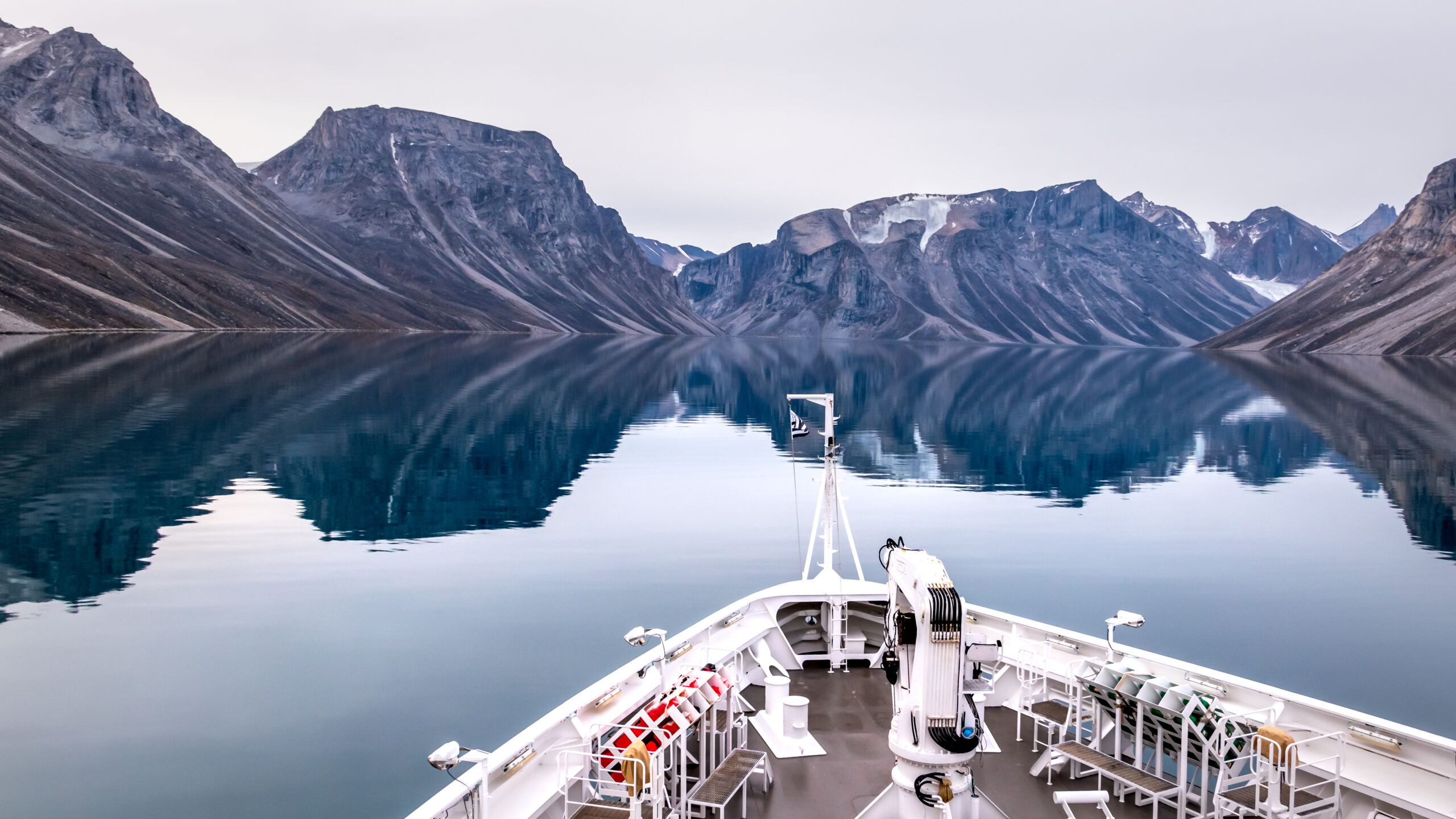
A: In Arctic waters, ship passages are typically the most intense underwater sound events recorded during the year—often elevating the sound levels above the natural soundscape for periods of several hours as a ship travels past the recording location. Because sound travels farther and faster in water than in air, ship noise can be detected tens of kilometers away, sometimes at distances greater than 50 km away.
It’s important to understand that not all frequencies of sound travel the same in water. Lower-pitched sounds produced by ship propellers and some larger machinery travel farther than higher-pitched sounds produced by the ship, like sonars.
From far away, only the low rumble of the propeller cavitation can be detected in underwater sound recordings. As the ship gets closer, the higher-pitched sounds become more apparent. Each ship has different characteristics that produce a unique acoustic ‘signature’. And each ship’s ‘signature’ changes with different operating speeds and machinery in use.
SOUND IN AIR VS. SOUND IN WATER
Sound moves about five times faster in seawater—around 1,500 meters per second—than in air, where it travels at roughly 340 meters per second.
In water, sound also travels much farther away from the source before it falls to levels that can’t be detected. For example, a large cargo ship might have emit roughly similar sound levels to a commercial airline jet taking off. On a quiet day, sound from large ships might be detectable from more than 50 km away while a large commercial airline taking off from an airport on a similarly quiet day might be detected less than 10 km away.
Q: What are the main sources of noise from ships?
A: Ships produce sound from many different systems onboard, but the propeller is usually the dominant source. As it spins, low pressure at the blade tips forms bubbles that collapse almost immediately—this cavitation process produces powerful low‑frequency noise, from 20 to 200 Hz, that can travel long distances.
Other sources include engines and generators, which create tonal vibrations; sonars, which emit short, intense pings for navigation, fishing, or research; and hydraulic and mechanical systems, which produce mid‑ and high‑frequency sounds. Each ship has a unique acoustic signature that changes with speed, load, and equipment in use, with slower speeds often reducing cavitation and noise.
Q: Do different types of vessels produce different sounds?
Each ship has a unique acoustic signature that also changes with different operating conditions onboard the ship, such as propulsion RPM, generators or other machinery running, or use of sonar systems.
Different ship types also have characteristic sounds within that category of ship. Cargo and tanker ship propellers produce powerful, low-frequency sounds. Passenger and cruise ships have multiple generators and auxiliary systems that create a broad range of frequencies. Research vessels often use different types of sonar, adding distinctive pulses of sound. Small boats operated by community residents and visiting ships produce intermittent but locally important noise, especially in quiet fjords.
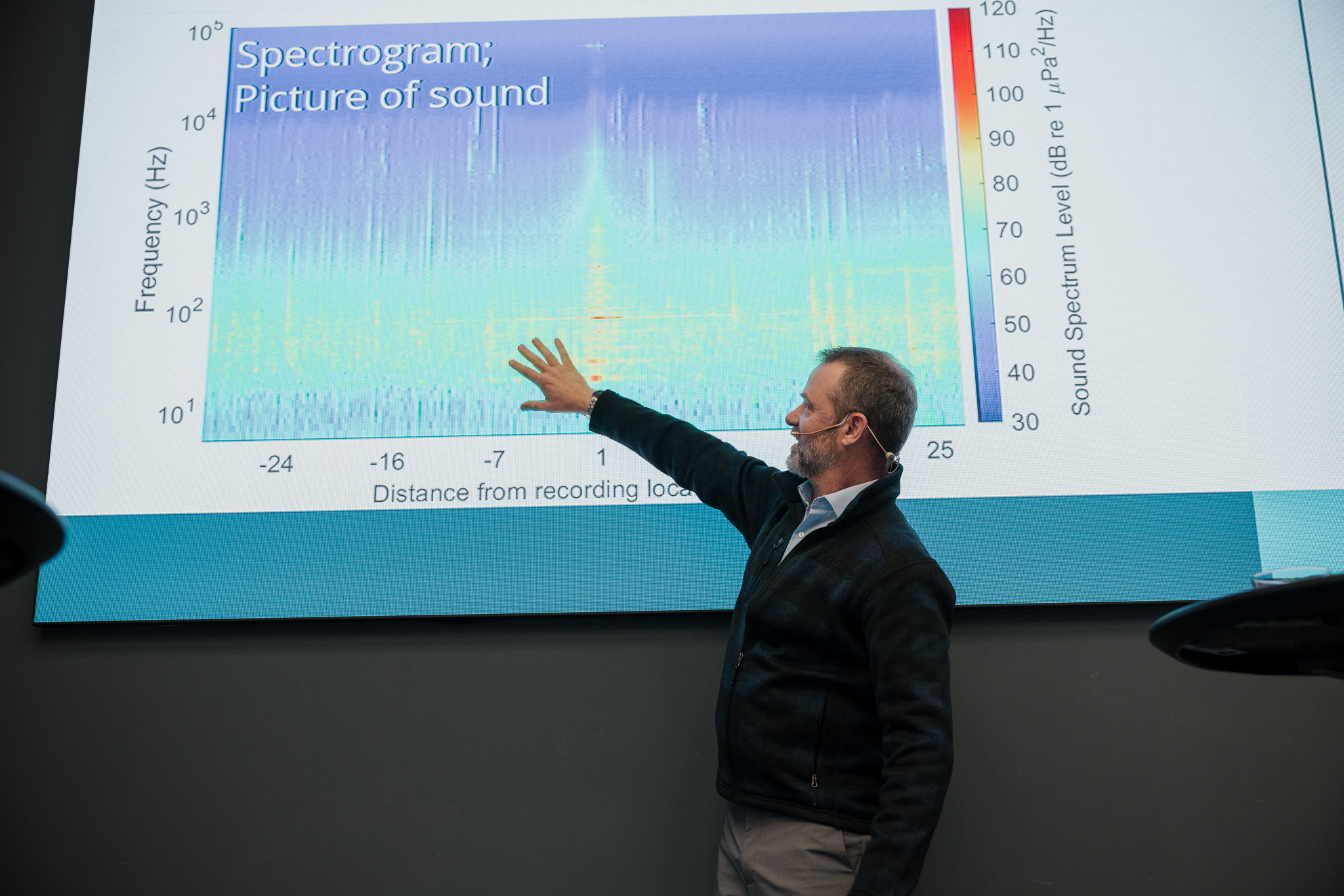
FIELD GUIDE TO SHIP SOUNDS
Each ship creates distinct bands like different instruments in an orchestra.
One-hour spectrograms of sound recorded near Pond Inlet, Nunavut, show the noise produced by three different ships traveling on a similar course and at similar speeds as they pass directly over a seafloor sound recorder. Each ship creates distinct bands on the plot, reflecting sounds from propeller cavitation, generators and other machinery, and sonar pings—much like different instruments in an orchestra. The sound from a small boat is also shown, recorded as it passes a nearby site in one of the region’s inlets.
Q: How can we compare ship noise to sounds we know?
It is challenging to compare sound in water to sound in air, where we are familiar with listening. The main differences are that air absorbs sound much more efficiently than water does as the sound travels outward from the source and that sound travels much faster in water than air. Our hearing system is also specialized for listening in air and is connected to our perception, which will be different from the hearing and perception of marine wildlife, like whales and seals. We can, however, make some general comparisons to help us get a sense of what those animals might experience when exposed to underwater noise from ships.
Most people have some personal experience with the noise from aircraft near airports or when a plane passes overhead. A large commercial jet emits more powerful sound from its engines than a ship produces at the propeller, yet the jet can usually only be heard from a distance of about 3–10 kilometers before the sound fades below the typical background levels in air. Underwater, the situation is different. Even though the energy emitted by a large cargo ship’s propeller is lower, its sound can often be detected tens of kilometers away—typically 30 to 50 kilometers in the quiet conditions of many Arctic ocean areas.
Because sound travels farther underwater than in air and ships move much more slowly than airplanes, noise from a passing ship is detectable for much longer than an airplane flying overhead. A passing commercial airliner may be heard for less than five minutes. A large ship passing an acoustic recorder on the seafloor can be detected for one to six hours or longer as it gradually approaches, passes overhead, and travels out of the area.
Q: Does underwater noise affect Arctic marine life?
A: Arctic marine mammals rely on sound for navigation, communication, and foraging, making them highly sensitive to disturbances in their otherwise quiet environment. This sensitivity is reflected in both Inuit knowledge and scientific research, which show that species such as narwhals, belugas, bowhead whales, and walrus can detect and respond to human-generated noise over long distances, with changes in movement, communication, and other behaviors—demonstrating that underwater noise can influence how these animals use their habitat.
STUDYING UNDERWATER NOISE EFFECTS
Researchers use a combination of methods to understand how Arctic marine mammals respond to underwater noise. Inuit knowledge plays a central role in guiding research—informing where monitoring takes place, how studies are timed, and how questions are framed—often anticipating patterns that are later confirmed by scientific data.
Together, these approaches provide a comprehensive understanding of how marine mammals respond to underwater noise and the conditions in which those responses occur.
Acoustic monitoring
Underwater hydrophones record whale calls, ship noise, and background sound. This helps measure noise levels, detect changes in behavior (such as reduced calling or foraging), identify masking of communication, and track how long sound persists in an area.
Animal tags
Tags attached to animals reveal detailed behavior, including diving, movement, and sound production. These studies show clear responses—for example, narwhals reducing foraging clicks several kilometers from ships, and belugas changing direction or speed.
Controlled and opportunistic exposures
Researchers observe animals as ships or sound sources approach, allowing them to link noise levels with behavioral responses and identify thresholds where changes occur.
Visual observations
Aerial surveys, drones, and shore-based monitoring document changes in surfacing, group behavior, and avoidance. These methods have shown, for example, that bowhead whales can shift migration routes by tens of kilometers.
Modeling and spatial analysis
Acoustic data combined with modeling helps estimate how noise affects communication range, overlaps with key habitats, and may lead to displacement or habitat loss.
Indigenous knowledge
Inuit observations provide critical insight into long-term patterns, including early behavioral changes, shifts in migration routes, and avoidance of noisy areas—often detecting effects before they are captured scientifically.
Q: How do different marine mammals respond to noise?
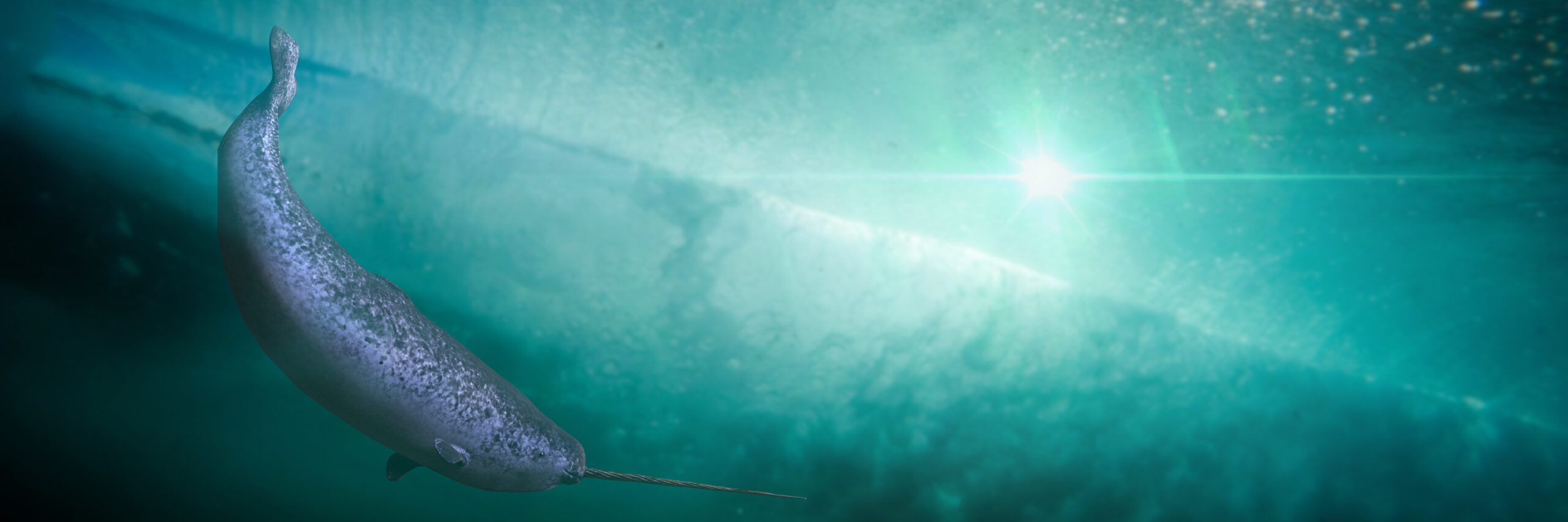
A: Narwhals are sensitive to underwater noise and show some of the strongest behavioral responses among Arctic marine mammals. Research and tagging studies demonstrate that they can detect and respond to ship noise over long distances—from several kilometers to as far as 100 km—often at sound levels close to natural background noise and before vessels are visible. Their responses include changes in swimming speed and direction, becoming motionless, sinking slowly in the water column, and reducing or ceasing vocal activity or movement. Foraging is especially affected, with buzzing rates declining at around 12 km and sometimes stopping entirely at 7–8 km, even at low noise levels, particularly in quiet fjords and narrow inlets.

Belugas respond to underwater noise with a combination of movement, vocal, and group-level changes. Studies show that they may avoid ships or icebreakers at distances of around 12–40 kilometers, increasing swim speed or changing direction to move away from noise. Vessel sounds can also mask beluga communication calls at distances up to 20–22 kilometers, reducing their ability to maintain group cohesion. While belugas may increase call amplitude or shift to higher frequencies to compensate (the “Lombard effect”), masking still limits effective communication range—especially in Arctic coastal and estuarine areas where they travel, socialize, and feed in groups.
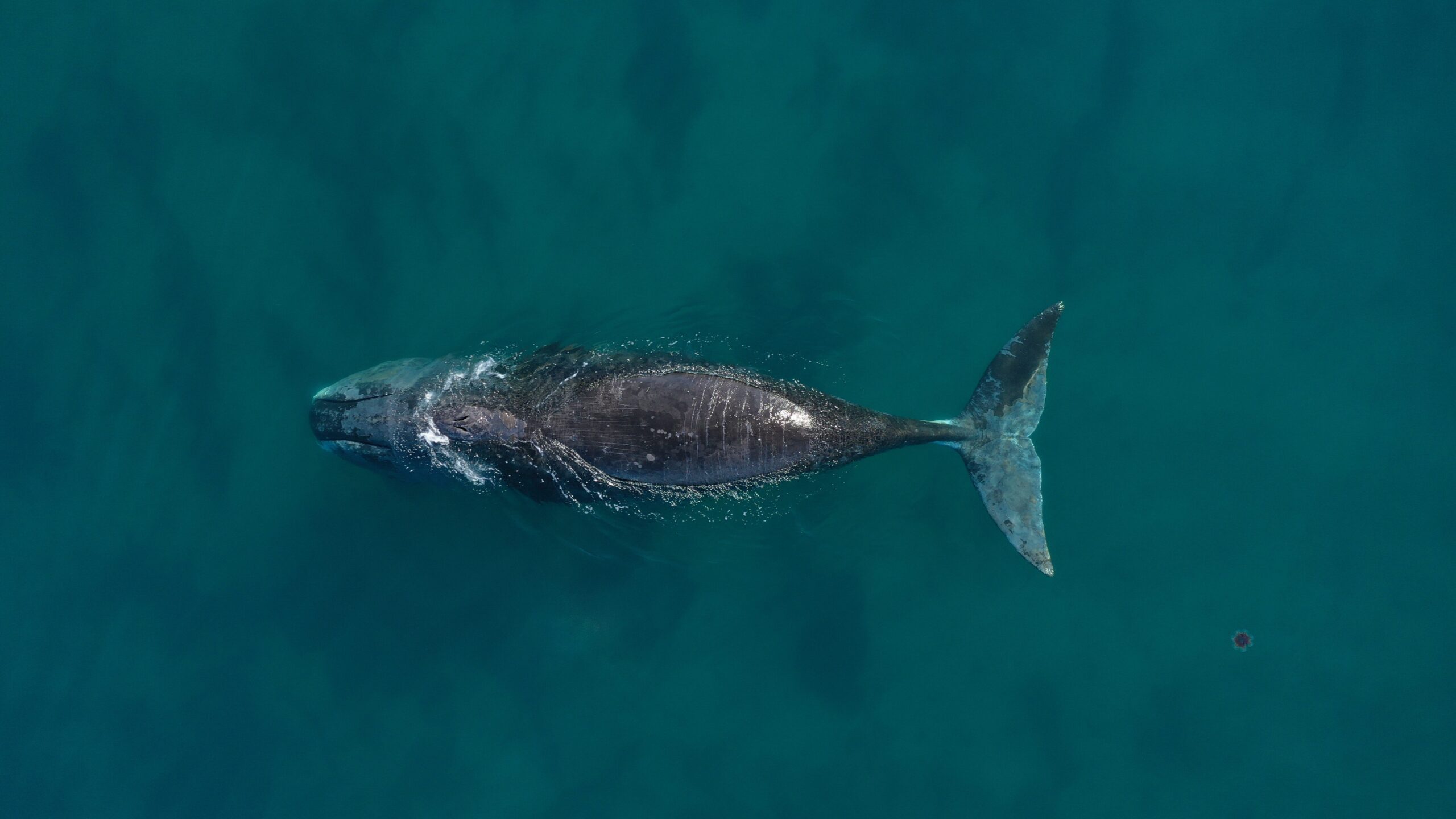
Bowhead whales are among the best-studied Arctic species in relation to underwater noise and show clear, long-distance responses to both vessels and industrial activity. Research in the Beaufort and Chukchi Seas demonstrates that they exhibit avoidance behavior, shift migration routes—often moving 20–30 km offshore—and reduce or stop calling when exposed to distant sound sources, even at levels below those that cause hearing damage. These changes can affect long-range communication used for migration, mating, and mother–calf spacing, while feeding individuals may also alter surfacing patterns or shift their distribution in response to noise.
Walrus responses to underwater noise are best documented at haul-out sites, where animals are highly sensitive to disturbance. Approaching vessels have been associated with reduced vocal activity, head lifts, movement toward the water, and occasional escape responses, with some studies indicating that walruses may go silent or move away at distances of around 10 km or more. They also react strongly to unexpected sounds such as aircraft, with startle responses observed at distances of several kilometers. Because large haul-outs can trigger group movements into the water, even moderate noise can pose risks.
Q: What can be done to reduce underwater noise?
A: Reducing underwater noise in the Arctic requires species-specific, location-specific understanding of how sound affects marine wildlife. Inuit and other Arctic residents have extensive knowledge of natural sound levels, seasonal patterns, and animal behavior, and they frequently observe how whales and seals respond to noise from distant vessels. This deep local knowledge provides a unique opportunity in the Arctic: researchers and communities can work together to understand not only how noise affects marine wildlife, but also how to manage and reduce those impacts in meaningful and practical ways.
One example of this is the UNM3CA program, where Inuit guidance is integrated at every stage of the research process—from selecting study sites and interpreting observations to deciding how and where ship measurements should be collected. This collaboration has accelerated scientific progress and is already helping to produce results that can be applied directly to local management questions.
DOES CLIMATE CHANGE AFFECT UNDERWATER NOISE?
Climate change influences underwater sound in the Arctic, but mainly indirectly.
As sea ice thins and retreats, open water periods increase—allowing sound to travel farther and ships to operate more often. Ice-covered waters are typically quieter, as the ice absorbs and scatters sound.
However, rising noise levels are driven primarily by increased human activity. Shipping, tourism, mining, and transport of goods are the main causes of growing noise in Arctic waters. Climate change enables longer operating seasons, but it is these economic drivers that determine where and when underwater noise increases.
Globally, numerous studies show that reducing ship speed tends to lower underwater noise emissions. Understanding each vessel’s specific noise signature, and how that signature changes with different speeds and operational states, is essential for designing effective, locally appropriate noise-reduction strategies. When ship operators know how their vessel behaves acoustically, and when resource managers have access to reliable measurements in their region, both groups can work together to identify practical options for lowering noise exposure to sensitive species.
In the Arctic, where communities, researchers, and operators often work closely together, collaboration is essential. Coordination with Hunters and Trappers Organizations, regional governments, and local observers helps ensure that noise-reduction efforts reflect community priorities and build on existing knowledge of wildlife behavior. By bringing together these different stakeholders, Arctic regions are well positioned to develop effective and equitable approaches to managing underwater noise.

Joshua M. Jones is a project scientist at the Scripps Institution of Oceanography, University of California San Diego, specializing in the use of underwater sound to observe the marine environment. Since 2006, he has led Arctic research to understand how marine mammals respond to environmental change and to underwater noise from vessels.
Josh directs a community-based acoustic research network in the Canadian Arctic in partnership with AECO, Oceans North, local Hunters and Trappers Organizations, and the Nunatsiavut Government.
His outreach and education projects include the award-winning Voices in the Sea exhibit, the Arctic: Six Seasons collaboration in contemporary music, and the SeaTech youth technology training program. He also brings three decades of experience as a licensed captain and wilderness guide in Alaska.

Last update: 08. June 2026