Underwater Noise in the Canadian Arctic
The UNM³-CA project
Eclipse Sound, located in the northeastern Canadian Arctic, is an important marine area for species such as narwhal and beluga, which rely heavily on sound for communication, navigation,and foraging. As vessel traffic in the region has increased, concerns have grown about how underwater noise may affect marine wildlife and the communities that depend on healthy marine ecosystems.
To better understand and address these impacts, AECO has participated in a collaborative research project focused on measuring and mapping underwater noise in Eclipse Sound. The project is carried out in partnership with Oceans North, the University of California San Diego, and the Mittimatalik Hunters and Trappers Organization, with support from Fisheries and Oceans Canada.
11
AECO members Participated
20
AECO vessels were measured
3
Sites across Nunavut and Nunatsiavut
66+
Measurements of ship sound levels
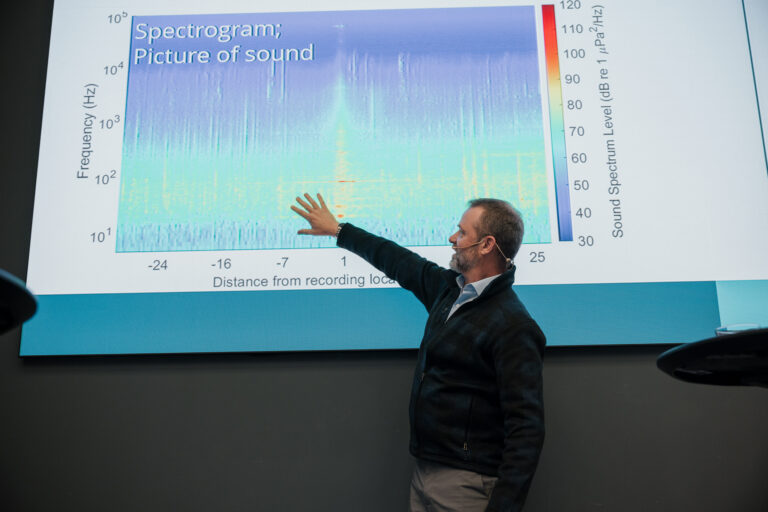
The research focuses on collecting ship‑specific noise measurements under different operating conditions and developing predictive noise maps that show how vessel activity contributes to the underwater soundscape. Results demonstrate that operational decisions—such as routing, timing, speed, and vessel characteristics—play an important role in shaping noise levels across space and time, and in how these noise patterns overlap with important marine habitat.
A key feature of the Eclipse Sound project is its community‑driven approach. Inuit knowledge and local priorities are integrated into project design, ensuring that research questions, methods, and outcomes are relevant, accessible, and meaningful to those most directly affected by changes in the marine environment.
Key Results
What’s Next?
The UNM³-CA project has established one of the most detailed datasets on underwater radiated noise from expedition cruise vessels operating in Arctic waters.
Building on this work, AECO has secured support from the Gordon and Betty Moore Foundation to:
- Map current underwater noise mitigation practices among members
- Identify opportunities for further noise reduction
- Support evidence-based dialogue on underwater radiated noise
- Contribute to minimizing shipping impacts on Arctic marine ecosystems
The project also aligns with growing international efforts, including work at the International Maritime Organization (IMO), to improve understanding and management of underwater radiated noise.


Last update: 04. September 2026