The Sound-Cruising Project
Improving Understanding of Arctic Soundscapes
Svalbard hosts diverse and sensitive marine ecosystems and is an important area for seals, whales, walrus, and other sound‑dependent species. Many Arctic endemic marine mammals have historically lived in acoustically quiet environments, making them particularly sensitive to changes in underwater soundscapes. At the same time, parts of the archipelago experience seasonal vessel activity related to research, tourism, and local operations, making Svalbard a relevant region for studying underwater noise in a High Arctic context.
To improve understanding of these dynamics, AECO collaborates with the Norwegian Polar Institute and Aarhus University on the research project Sound‑Cruising – Investigating Characteristics and Noise Budgets of Cruise Operations in Svalbard. The project is co-funded by Svalbard’s Environmental Protection Fund.
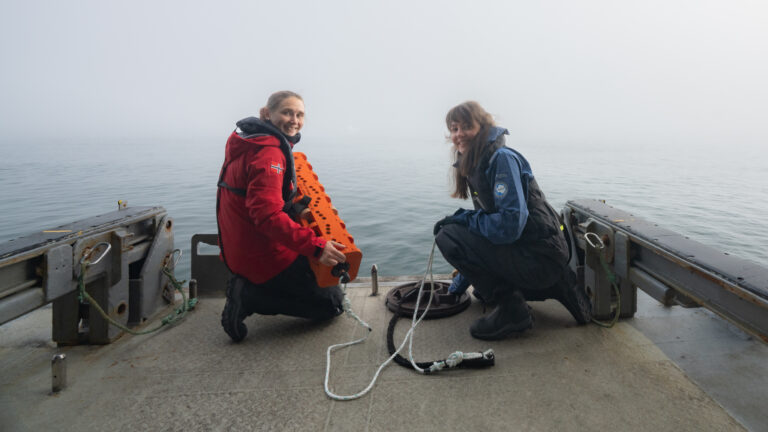
The research focuses on collecting ship‑specific noise measurements, with particular attention given to non‑transit expedition cruise activities, such as station‑keeping, scenic cruising, and small‑boat operations. These activities may result in prolonged, repeated, orcumulative noise exposure in fjords that overlap with key marine mammal habitats.
By combining passive acoustic monitoring with vessel‑tracking data, the project links observed sound levels to specific vessel types, operational patterns, and activity durations, improving understanding of how underwater noise varies across space and time.
Findings from the Svalbard study are intended to support science‑based decision‑making, including voyage‑planning considerations, operational practices, and future guideline development. The data will also contribute to long‑term soundscape monitoring in Svalbard and provide a baseline for assessing future trends and the effectiveness of noise‑reduction measures.
Last update: 04. September 2026